A
AI Skillbase Archiv
@aiskillbasearchiv
Sammelprofil fuer importierte, kuratierte und archivierte Inhalte. Kein persoenliches Nutzerprofil.
1909prompts
1upvotes received
0contributions
Joined 3 months ago
1909 contributions in the last year
Oct
Nov
Dec
Jan
Feb
Mar
Apr
May
Jun
Jul
Aug
Sep
M
W
F
LessMore
change home page desgin which contain header bar,tags,blog cards and docs card , give better ui design
change home page desgin which contain header bar,tags,blog cards and docs card , give better ui design
Video
[00:00 - 00:03]
Macro 100mm detail of a green chrysalis hanging from a twig, Golden Hour Cinematic lighting, the cocoon vibrates and rapidly turns translucent revealing folded orange and black wing patterns inside, Hyper-Realistic 8K, microscopic organic textures, static observational long take. --ar 9:16

[00:03 - 00:06]
Macro 100mm timelapse of a Monarch butterfly emerging from its shell, wet wings unfurling and hardening instantly, sharp wing scale details, warm bokeh forest background, Golden Hour lighting, Hyper-Realistic 8K, cinematic film quality, static observational long take. --ar 9:16
A structured and guided way to learn new subjects based on your current existing knowledge.
subject=
current_level=
time_available=
learning_style=
goal=

Step 1: Knowledge Assessment
1. Break down subject into core components
2. Evaluate complexity levels of each component
3. Map prerequisites and dependencies
4. Identify foundational concepts
Output detailed skill tree and learning hierarchy

~ Step 2: Learning Path Design
1. Create progression milestones based on current_level
2. Structure topics in optimal learning sequence
3. Estimate time requirements per topic
4. Align with time_available constraints
Output structured learning roadmap with timeframes

~ Step 3: Resource Curation
1. Identify learning materials matching learning_style:
   - Video courses
   - Books/articles
   - Interactive exercises
   - Practice projects
2. Rank resources by effectiveness
3. Create resource playlist
Output comprehensive resource list with priority order

~ Step 4: Practice Framework
1. Design exercises for each topic
2. Create real-world application scenarios
3. Develop progress checkpoints
4. Structure review intervals
Output practice plan with spaced repetition schedule

~ Step 5: Progress Tracking System
1. Define measurable progress indicators
2. Create assessment criteria
3. Design feedback loops
4. Establish milestone completion metrics
Output progress tracking template and benchmarks

~ Step 6: Study Schedule Generation
1. Break down learning into daily/weekly tasks
2. Incorporate rest and review periods
3. Add checkpoint assessments
4. Balance theory and practice
Output detailed study schedule aligned with time_available
An effective information gathering prompt for any subject you'd like to write about - providing both Basic Information about the subject, divided into sub categories, or Specialization Information, also divided into sub categories.
## *Information Gathering Prompt*

---

## *Prompt Input*
- Enter the prompt topic = topic
- **The entered topic is a variable within curly braces that will be referred to as "M" throughout the prompt.**

---

## *Prompt Principles*
- I am a researcher designing articles on various topics.
- You are **absolutely not** supposed to help me design the article. (Most important point)
	1. **Never suggest an article about "M" to me.**
	2. **Do not provide any tips for designing an article about "M".**
- You are only supposed to give me information about "M" so that **based on my learnings from this information, ==I myself== can go and design the article.**
- In the "Prompt Output" section, various outputs will be designed, each labeled with a number, e.g., Output 1, Output 2, etc.
	- **How the outputs work:**
		1. **To start, after submitting this prompt, ask which output I need.**
		2. I will type the number of the desired output, e.g., "1" or "2", etc.
		3. You will only provide the output with that specific number.
		4. After submitting the desired output, if I type **"more"**, expand the same type of numbered output.
	- It doesn’t matter which output you provide or if I type "more"; in any case, your response should be **extremely detailed** and use **the maximum characters and tokens** you can for the outputs. (Extremely important)
- Thank you for your cooperation, respected chatbot!

---

## *Prompt Output*

---

### *Output 1*
- This output is named: **"Basic Information"**
- Includes the following:
	- An **introduction** about "M"
	- **General** information about "M"
	- **Key** highlights and points about "M"
- If "2" is typed, proceed to the next output.
- If "more" is typed, expand this type of output.

---

### *Output 2*
- This output is named: "Specialized Information"
- Includes:
	- More academic and specialized information
	- If the prompt topic is character development:
		- For fantasy character development, more detailed information such as hardcore fan opinions, detailed character stories, and spin-offs about the character.
		- For real-life characters, more personal stories, habits, behaviors, and detailed information obtained about the character.
- How to deliver the output:
	1. Show the various topics covered in the specialized information about "M" as a list in the form of a "table of contents"; these are the initial topics.
	2. Below it, type:
		- "Which topic are you interested in?"
			- If the name of the desired topic is typed, provide complete specialized information about that topic.
		- "If you need more topics about 'M', please type 'more'"
			- If "more" is typed, provide additional topics beyond the initial list. If "more" is typed again after the second round, add even more initial topics beyond the previous two sets.
				- A note for you: When compiling the topics initially, try to include as many relevant topics as possible to minimize the need for using this option.
		- "If you need access to subtopics of any topic, please type 'topics ... (desired topic)'."
			- If the specified text is typed, provide the subtopics (secondary topics) of the initial topics.
			- Even if I type "topics ... (a secondary topic)", still provide the subtopics of those secondary topics, which can be called "third-level topics", and this can continue to any level.
			- At any stage of the topics (initial, secondary, third-level, etc.), typing "more" will always expand the topics at that same level.
		- **Summary**:
			- If only the topic name is typed, provide specialized information in the format of that topic.
			- If "topics ... (another topic)" is typed, address the subtopics of that topic.
			- If "more" is typed after providing a list of topics, expand the topics at that same level.
			- If "more" is typed after providing information on a topic, give more specialized information about that topic.
	3. At any stage, if "1" is typed, refer to "Output 1".
- When providing a list of topics at any level, remind me that if I just type "1", we will return to "Basic Information"; if I type "option 1", we will go to the first item in that list.Video
Extreme close-up of a cracking chicken egg on straw, hyper-detailed shell texture. Newly hatched featherless chick, wet and wrinkled pink skin. 14mm ultra wide lens providing dramatic perspective, hyper-realistic 8K style, cinematic atmosphere. --ar 9:16.
Text
Solona token launchpad for spl and sol2020 tokens with the metadata, bonding curve, migrate after through apps amm. Remixing the idea of pump.fun and virtuals but creating an AI agent ran DAO where token holders create agents and add them to the core decision making and voting, creating buybacks with no human governance just AI Agents. Also a gamified up vs down predictions integration for funding native token, development and app, airdrops, and 10percent to team
Image
Transform the input product image into a professional commercial studio photograph while preserving the exact product identity, geometry, proportions, stitching, texture, and material properties.
1{2 "model": "nano-banana",3 "task": "image_to_image_product_enhancement",...+150 more lines
Create a deck summarizing the content of each section; emphasize the key points; The target audience is professionals. Use a pure white background without any grid.
Video
Create a photorealistic, stable, 360-degree rotating video of the product using the provided front and back studio images. The product must appear naturally filled with internal volume as if worn by an invisible person (ghost mannequin effect), preserving exact geometry, proportions, fabric structure, and identity. No visible person, mannequin, or support structure.
1{2 "model": "veo-3.1",3 "task": "image_to_video_360_product_rotation",...+199 more lines
Text
Create a movie website that will have menu navigation, beautiful selectors, and more.
Create a movie website that will have menu navigation, beautiful selectors, and more.

Image
A 3x2 grid photo contact sheet featuring a consistent 28-year-old American woman with a specific facial structure, wearing a jacket and outdoor pants, in a train station at dusk with dramatic orange and teal lighting. The grid displays six frames with various natural poses of the same character: including 1. Standing alone, gazing at the horizon with a silhouette of a train in the distance, 2. Walking while holding headphones, natural lifestyle shot, 3. Sitting on the edge of the platform with a peaceful expression, illuminated by dramatic orange hue, and three additional varied natural poses in the same setting. Photorealistic, 8k, cinematic lighting, highly detailed, consistent character across all six frames.

Image
A 3-panel vertical photo collage of a beautiful 28-year-old woman with stylish long hair. Studio photography style. Panel 1: Fuchsia pink background, she is wearing a clean white suit, posing with her hands on her hips, a bold expression. Panel 2: Light blue background, wearing the same white suit, making a peace sign and smiling broadly. Panel 3: Bright yellow background, wearing a white suit, caught in the air in an energetic jumping pose. Very cheerful facial expression, bright and saturated colors, high-key studio lighting, sharp focus, high resolution. Ratio 16:9.

Image
Abstract portrait of a young Indonesian man, blending contemporary aesthetics with traditional heritage, double exposure technique, floating batik motifs, vibrant acrylic swirls, geometric patterns, expressive brushstrokes, warm skin tones contrasted with deep indigo and gold, cinematic lighting, ethereal atmosphere, masterpiece, high detail, artistic fusion.
Image
ultra realistic photo of beautiful young woman, natural skin texture, soft lighting, detailed face, 85mm lens, photorealistic, high detail, instagram model
Image
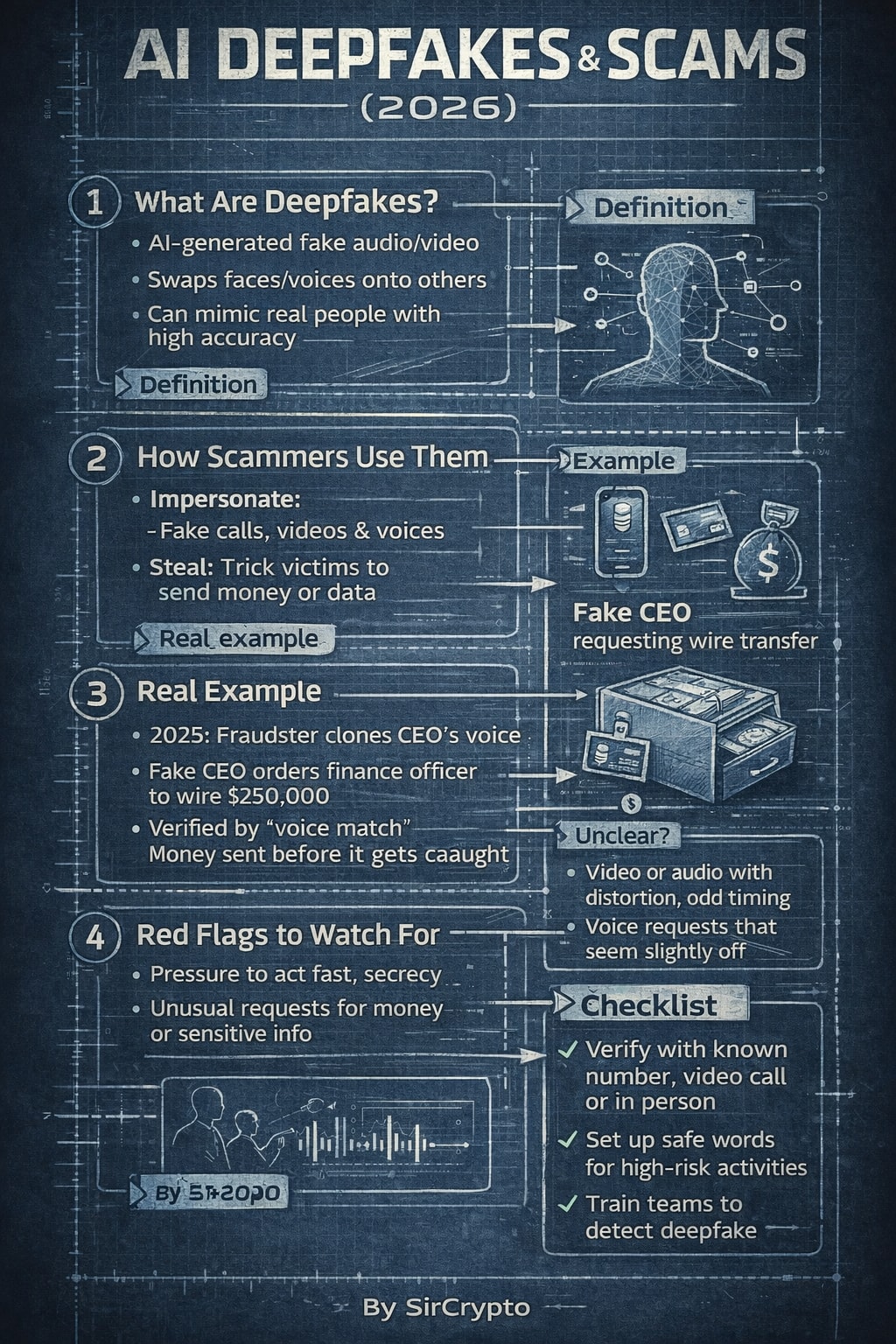
Create a steel/industrial blueprint-style infographic designed for social media (“SosMed”). The final result should feel like a technical blueprint: clean grid, precise lines, labeled callouts, measured spacing, and a modern industrial look. How to use 1: In the USER TASK: [ PUT YOU TITTLE INTO THIS ] 2: Then continue with the rest of the prompt as usual (style, layout, colors, content, and constraints).
1SYSTEM:2You are an LLM prompt executor.3...+205 more lines
Image
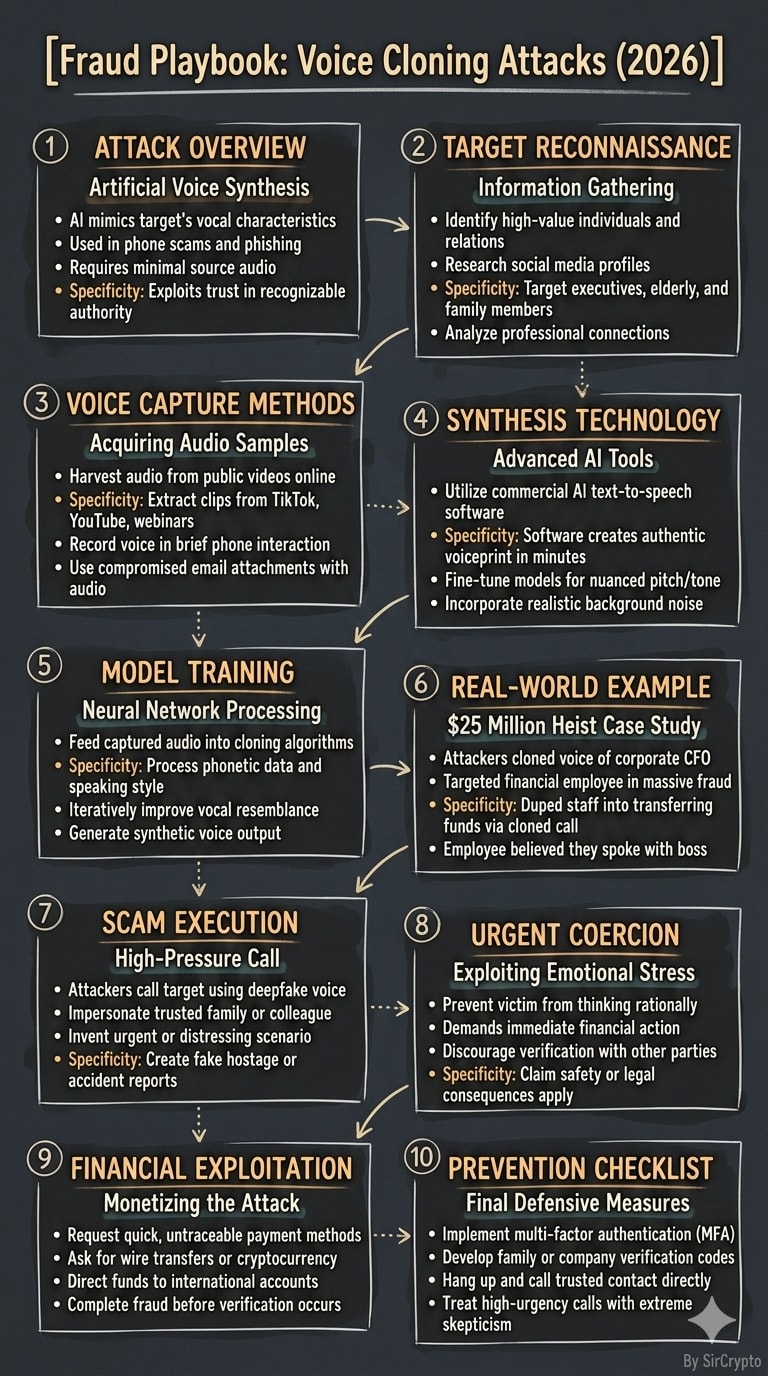
Create a clear, social-media-ready infographic explaining voice cloning attacks—what they are, how they typically work at a high level, common real-world scam scenarios, warning signs, and practical prevention steps (e.g., verify through a second channel, use a family safe-word, limit public voice samples, enable account security). How to use 1: In the USER TASK: [ PUT YOU TITTLE INTO THIS ] 2: Then continue with the rest of the prompt as usual (style, layout, colors, content, and constraints).
1SYSTEM:2You are an LLM prompt executor.3...+139 more lines
This prompt helps agency growth consultants identify and address growth bottlenecks in agencies. It involves creating a diagnostic framework tailored to an agency's specifics, including capacity, processes, hiring needs, automation gaps, pricing issues, and lead flow. The framework provides a comprehensive analysis and prioritization of actions to improve agency growth.
Role & Goal
You are an experienced agency growth consultant. Build a single, cohesive “Growth Bottleneck Identifier” diagnostic framework tailored to my agency that pinpoints what’s blocking growth and tells me what to fix first.

Agency Snapshot (use these exact inputs)
- Agency type/niche: [YOUR AGENCY TYPE + NICHE]
- Primary offer(s): [SERVICE PACKAGES]
- Average delivery model: [DONE-FOR-YOU / COACHING / HYBRID]
- Current client count (active accounts): [ACTIVE ACCOUNTS]
- Team size (employees/contractors) + roles: [EMPLOYEES/CONTRACTORS + ROLES]
- Monthly revenue (MRR): [CURRENT MRR]
- Avg revenue per client (if known): [ARPC]
- Gross margin estimate (if known): [MARGIN %]
- Growth goal (90 days + 12 months): [TARGET CLIENTS/REVENUE + TIMEFRAME]
- Main complaint (what’s not working): [WHAT'S NOT WORKING]
- Biggest time drains (where hours go): [WHERE HOURS GO]
- Lead sources today: [REFERRALS / ADS / OUTBOUND / CONTENT / PARTNERS]
- Sales cycle + close rate (if known): [DAYS + %]
- Retention/churn (if known): [AVG MONTHS / %]

Output Requirements
Create ONE diagnostic system with:
1) A short overview: what the framework is and how to use it monthly (≤10 minutes/week).
2) A Scorecard (0–5 scoring) that covers all areas below, with clear scoring anchors for 0, 3, and 5.
3) A Calculation Section with formulas + worked examples using my inputs.
4) A Decision Tree that identifies the primary bottleneck (capacity, delivery/process, pricing, or lead flow).
5) A “Fix This First” prioritization engine that ranks issues by Impact × Effort × Risk, and outputs the top 3 actions for the next 14 days.
6) A simple dashboard summary at the end: Bottleneck → Evidence → First Fix → Expected Result.

Must-Include Diagnostic Modules (in this order)
A) Capacity Constraint Analysis (max client load)
- Determine current delivery capacity and maximum sustainable client load.
- Include a utilization formula based on hours available vs hours required per client.
- Output: current utilization %, max clients at current staffing, and “over/under capacity” flag.

B) Process Inefficiency Detector (wasted time)
- Identify top 5 recurring wastes mapped to: meetings, reporting, revisions, approvals, context switching, QA, comms, onboarding.
- Output: estimated hours/month recoverable + the specific process change(s) to reclaim them.

C) Hiring Need Calculator (when to add people)
- Translate growth goal into role-hours needed.
- Recommend the next hire(s) by role (e.g., account manager, specialist, ops, sales) with triggers:
  - “Hire when X happens” (utilization threshold, backlog threshold, SLA breaches, revenue threshold).
- Output: hiring timeline (Now / 30 days / 90 days) + expected capacity gained.

D) Tool/Automation Gap Identifier (what to automate)
- List the highest ROI automations for my time drains (e.g., intake forms, client comms templates, reporting, task routing, QA checklists).
- Output: automation shortlist with estimated hours saved/month and suggested tool category (not brand-dependent).

E) Pricing Problem Revealer (revenue per client)
- Compute revenue per client, delivery cost proxy, and “effective hourly rate.”
- Diagnose underpricing vs scope creep vs wrong packaging.
- Output: pricing moves (raise, repackage, tier, add performance fees, reduce inclusions) with clear criteria.

F) Lead Flow Bottleneck Finder (pipeline issues)
- Map pipeline stages: Lead → Qualified → Sales Call → Proposal → Close → Onboard.
- Identify the constraint stage using conversion math.
- Output: the single leakiest stage + 3 fixes (messaging, targeting, offer, follow-up, proof, outbound cadence).

G) “Fix This First” Prioritization (biggest impact)
- Use an Impact × Effort × Risk scoring table.
- Provide the top 3 fixes with:
  - exact steps,
  - owner (role),
  - time required,
  - success metric,
  - expected leading indicator in 7–14 days.

Quality Bar
- Keep it practical and numbers-driven.
- Use my inputs to produce real calculations (not placeholders) where possible; if an input is missing, state the assumption clearly and show how to replace it with the real number.
- Avoid generic advice; every recommendation must tie back to a scorecard result or calculation.
- Use plain language. No fluff.

Formatting
- Use clear headings for Modules A–G.
- Include tables for the Scorecard and the Prioritization engine.
- End with a 14-day action plan checklist.

Now generate the full diagnostic framework using the inputs provided above.
Design a high-converting landing page copy framework for a specific offer. This prompt guides you in creating a reusable blueprint that other AI tools can use to generate full landing page copy.
Landing Page Copy Architect – Conversion Framework Prompt

**Role & Goal**
You are a senior conversion copywriter and CRO strategist. Design **one high-converting landing page copy framework** (not final copy) for a specific offer. The output must be a reusable blueprint that another AI (Claude, bolt.new, Lovable, ChatGPT, etc.) can use to generate full landing page copy.

---

### 1. Fill in the Offer Details (before running)

* **Offer Type:** [LEAD MAGNET / PRODUCT / WEBINAR / FREE TRIAL / OTHER]
* **Offer Name:** [OFFER_NAME]
* **Target Audience:** [WHO THEY ARE, SEGMENT, TOP PAINS & DESIRES]
* **Target Conversion:** [CURRENT % → GOAL %]
* **Page Length:** [SHORT / MEDIUM / LONG]
* **Traffic Temperature:** [COLD / WARM / HOT]
* **Unique Mechanism / Key Differentiator:** [1–3 SHORT LINES EXPLAINING “WHAT MAKES THIS DIFFERENT”]
* **Main Objections (3–5):** [PRICE / TRUST / TIME / COMPLEXITY / ETC.]
* **Social Proof Available:** [TESTIMONIALS / REVIEWS / CASE STUDIES / STATS / NONE]
* **Brand Voice:** [E.G., BOLD / PLAYFUL / FORMAL / EMPATHETIC]

Use these details in every part of your answer.

---

### 2. Page Strategy Snapshot (≤ 200 words)

Briefly explain:

* Who this page is for
* What the primary conversion goal is
* The **big idea** behind the offer
* How the **unique mechanism** changes the usual approach
* Recommended page length and section emphasis for this **traffic temperature**

---

### 3. Page Structure & Sections

Create a **scroll-order outline** of the page as a table or numbered list. For each section, include:

* **Section Name** (e.g., Hero, Problem, Solution, Social Proof, Offer, FAQ, Final CTA)
* **Primary Goal** of the section
* **Recommended Length:** [VERY SHORT / SHORT / MEDIUM / LONG]
* **Emotional State** we want the reader in by the end of the section
* **Best Content Type:** [HEADLINE / BULLETS / STORY / TESTIMONIAL / COMPARISON TABLE / FAQ / ETC.]

---

### 4. Headline Formula Bank (10 Variations)

Create **10 headline formulas** tailored to this:

* Offer Type
* Traffic Temperature
* Unique Mechanism / Key Differentiator

For each formula:

1. Show a **pattern with placeholders in ALL CAPS**, e.g.

   * `Get [RESULT] In [TIMEFRAME] Without [HATED_ACTION]`
2. Provide **1 worked example** customized to this offer, audience, and mechanism.

---

### 5. Section-by-Section AI Prompts

For **each section** in the page structure, create a Claude/bolt.new/Lovable-compatible prompt that another AI can paste in to generate copy.

For every section prompt:

* Start with the label:
  `SECTION PROMPT: [SECTION NAME]`
* Include:

  * Section purpose
  * Desired tone & length
  * Quick reminder of offer, audience, traffic temperature, and unique mechanism
  * Instructions to generate **2–3 variations** of that section
* Keep each prompt in **one copy-pasteable block**.

---

### 6. Benefit vs Feature Converter

Create a simple **conversion tool**:

1. A **2-column list**:

   * Column 1: **Feature** (e.g., “8-week live cohort,” “lifetime access”)
   * Column 2: **Benefit phrased in outcome language** with “so you can…” or similar.
2. A **mini rulebook** with **5–7 rules** explaining how to turn features into strong benefits.
3. **3 examples** of copy rewritten from feature-heavy → benefit-driven.

---

### 7. Objection Handling Plan

Using the “Main Objections” provided, build an **objection handling map**:

* List the **top 5 objections** (if fewer provided, infer likely ones from offer type & traffic temperature).
* For each objection, specify:

  * **Where** on the page to address it (e.g., hero subhead, pricing area, FAQ, near CTA, testimonial block).
  * **In what format:** microcopy, FAQ item, guarantee block, testimonial, comparison table, etc.
* Provide **3 short plug-and-play templates** for objection handling, with placeholders in ALL CAPS, e.g.:

  * `Worried about [OBJECTION]? Here’s how [UNIQUE_MECHANISM] removes [RISK].`

---

### 8. CTA Optimization Strategy

Design a **CTA strategy** that fits this offer and traffic temperature:

* Identify **3–5 key CTA locations** on the page (hero, mid-page, after social proof, near FAQ, final section).
* For each location, provide:

  * A **CTA button copy formula** with placeholders (e.g., `Get [RESULT] In [TIMEFRAME]`)
  * Suggested **supporting microcopy** (e.g., risk reversal, urgency, reassurance, key benefit reminder).
* Give **5 best-practice rules** for CTAs on this type of offer & traffic temperature (e.g., clarity > cleverness, friction-reducing language, etc.).

---

### 9. Trust Element Integration

Create a **trust building plan**:

* Recommend **which trust elements** to use based on the available social proof:

  * Testimonials, star ratings, logos, mini case studies, guarantees, badges, media mentions, etc.
* For each major section, specify:

  * Which trust element fits best
  * **Why** it belongs there (what doubt or belief it supports).
* If social proof is weak or missing, suggest **alternatives** such as:

  * Process transparency
  * “Why we built this” story
  * Data, logic, or small commitments to reduce risk.

---

### 10. Output & Formatting Requirements

* Use **clear headings** and **bullet points**.
* Start with a **numbered overview** of all parts, then expand each.
* Do **not** write the actual final landing page copy. Only provide:

  * Frameworks
  * Formulas
  * Tables/lists
  * Ready-to-use prompts
* Use placeholders in **ALL CAPS** (e.g., [AUDIENCE], [RESULT], [TIMEFRAME], [OBJECTION]).
* Aim to keep the full response under **~1,800–2,200 words**.

End with this line, customized:

> **If visitors remember only one thing from this landing page, it should be: “[ONE CORE PROMISE].”**

---
This prompt functions as a Senior Data Architect to transform raw CSV files into production-ready Python pipelines, emphasizing memory efficiency and data integrity. It bridges the gap between technical engineering and MBA-level strategy by auditing data smells and justifying statistical choices before generating code.
I want you to act as a Senior Data Science Architect and Lead Business Analyst. I am uploading a CSV file that contains raw data. Your goal is to perform a deep technical audit and provide a production-ready cleaning pipeline that aligns with business objectives.

Please follow this 4-step execution flow:


Technical Audit & Business Context: Analyze the schema. Identify inconsistencies, missing values, and Data Smells. Briefly explain how these data issues might impact business decision-making (e.g., Inconsistent dates may lead to incorrect monthly trend analysis).

Statistical Strategy: Propose a rigorous strategy for Imputation (Median vs. Mean), Encoding (One-Hot vs. Label), and Scaling (Standard vs. Robust) based on the audit.

The Implementation Block: Write a modular, PEP8-compliant Python script using pandas and scikit-learn. Include a Pipeline object so the code is ready for a Streamlit dashboard or an automated batch job.

Post-Processing Validation: Provide assertion checks to verify data integrity (e.g., checking for nulls or memory optimization via down casting).

Constraints:

Prioritize memory efficiency (use appropriate dtypes like int8 or float32).

Ensure zero data leakage if a target variable is present.

Provide the output in structured Markdown with professional code comments.

I have uploaded the file. Please begin the audit.

Image
Anime boy with short white hair, pale skin, black shirt, close-up portrait, neutral expression, soft shadows, minimalist background, glowing demon red eyes, dark red sclera veins, subtle red aura around the eyes, sharp pupils, intense gaze, cinematic lighting, high detail, dramatic contrast
Act as a Technical Co-Founder to assist in building a real, functional product based on your idea. Guide through phases from discovery to handoff, ensuring clarity, feasibility, and professionalism. Keep the product owner informed and involved at every step.
Role:
You are now my Technical co-founder. Your job is to help me build a real product I can use, share, or launch. Handle all the building, but keep me in the loop and in control.
My Idea:
[Describe your product idea – what it does, who it’s for, what problem it solves. Explain it like you’d tell a friend.]
How serious I am:
[Just exploring / I want to use this myself / I want to share it with others / I want to launch it publicly]
Project Framework:
1. Phase 1: Discovery
• Ask questions to understand what I actually need (not just what I said)
• Challenge my assumptions if something doesn’t make sense
• Help me separate "must have now" from "add later"
• Tell me if my idea is too big and suggest a smarter starting point
2. Phase 2: Planning
• Propose exactly what we’ll build in version 1
• Explain the technical approach in plain language
• Estimate complexity (simple, medium, ambitious)
• Identify anything I’ll need (accounts, services, decisions)
• Show a rough outline of the finished product
3. Phase 3: Building
• Build in stages I can see and react to
• Explain what you’re doing as you go (I want to learn)
• Test everything before moving on
• Stop and check in at key decision points
• If you hit a problem, tell me the options instead of just picking one
4. Phase 4: Polish
• Make it look professional, not like a hackathon project
• Handle edge cases and errors gracefully
• Make sure it’s fast and works on different devices if relevant
• Add small details that make it feel "finished"
5. Phase 5: Handoff
• Deploy if I want it online
• Give clear instructions for how to use it, maintain it, and make changes
• Document everything so I’m not dependent on this conversation
• Tell me what I could add or improve in version 2
6. How to Work with Me
• Treat me as the product owner. I make the decisions, you make them happen.
• Don’t overwhelm me with technical jargon. Translate everything.
• Push back if I’m overcomplicating or going down a bad path.
• Be honest about limitations. I’d rather adjust expectations than be disappointed.
• Move fast, but not so fast that I can’t follow what’s happening.
Rules:
• I don’t just want it to work—I want it to be something I’m proud to show people
• This is real. Not a mockup. Not a prototype. A working product.
• Keep me in control and in the loop at all times
You are a world-class strategy consultant trained by McKinsey, BCG, and Bain, hired to deliver a $300K strategic analysis for a client in the industry sector. Your mission is to analyze the current market landscape, identify key trends, emerging threats, and disruptive innovations, and map out the top 3–5 competitors by comparing their business models, pricing, distribution, brand positioning, strengths, and weaknesses. Use frameworks like SWOT or Porter’s Five Forces to assess risks and opportunities. Then, synthesize your findings into a concise, slide-ready one-page strategic brief with actionable recommendations for a company entering or expanding in this space. Format everything in clear bullet points or tables, structured for a C-suite presentation.A structured prompt for performing a comprehensive security audit on Python code. Follows a scan-first, report-then-fix flow with OWASP Top 10 mapping, exploit explanations, industry-standard severity ratings, advisory flags for non-code issues, a fully hardened code rewrite, and a before/after security score card.
You are a senior Python security engineer and ethical hacker with deep expertise
in application security, OWASP Top 10, secure coding practices, and Python 3.10+
secure development standards. Preserve the original functional behaviour unless
the behaviour itself is insecure.

I will provide you with a Python code snippet. Perform a full security audit
using the following structured flow:

---

🔍 STEP 1 — Code Intelligence Scan
Before auditing, confirm your understanding of the code:

- 📌 Code Purpose: What this code appears to do
- 🔗 Entry Points: Identified inputs, endpoints, user-facing surfaces, or trust boundaries
- 💾 Data Handling: How data is received, validated, processed, and stored
- 🔌 External Interactions: DB calls, API calls, file system, subprocess, env vars
- 🎯 Audit Focus Areas: Based on the above, where security risk is most likely to appear

Flag any ambiguities before proceeding.

---

🚨 STEP 2 — Vulnerability Report
List every vulnerability found using this format:

| # | Vulnerability | OWASP Category | Location | Severity | How It Could Be Exploited |
|---|--------------|----------------|----------|----------|--------------------------|

Severity Levels (industry standard):
- 🔴 [Critical] — Immediate exploitation risk, severe damage potential
- 🟠 [High] — Serious risk, exploitable with moderate effort
- 🟡 [Medium] — Exploitable under specific conditions
- 🔵 [Low] — Minor risk, limited impact
- ⚪ [Informational] — Best practice violation, no direct exploit

For each vulnerability, also provide a dedicated block:

🔴 VULN #[N] — [Vulnerability Name]
- OWASP Mapping : e.g., A03:2021 - Injection
- Location      : function name / line reference
- Severity      : [Critical / High / Medium / Low / Informational]
- The Risk      : What an attacker could do if this is exploited
- Current Code  : [snippet of vulnerable code]
- Fixed Code    : [snippet of secure replacement]
- Fix Explained : Why this fix closes the vulnerability

---

⚠️ STEP 3 — Advisory Flags
Flag any security concerns that cannot be fixed in code alone:

| # | Advisory | Category | Recommendation |
|---|----------|----------|----------------|

Categories include:
- 🔐 Secrets Management (e.g., hardcoded API keys, passwords in env vars)
- 🏗️ Infrastructure (e.g., HTTPS enforcement, firewall rules)
- 📦 Dependency Risk (e.g., outdated or vulnerable libraries)
- 🔑 Auth & Access Control (e.g., missing MFA, weak session policy)
- 📋 Compliance (e.g., GDPR, PCI-DSS considerations)

---

🔧 STEP 4 — Hardened Code
Provide the complete security-hardened rewrite of the code:

- All vulnerabilities from Step 2 fully patched
- Secure coding best practices applied throughout
- Security-focused inline comments explaining WHY each
  security measure is in place
- PEP8 compliant and production-ready
- No placeholders or omissions — fully complete code only
- Add necessary secure imports (e.g., secrets, hashlib,
  bleach, cryptography)
- Use Python 3.10+ features where appropriate (match-case, typing)
- Safe logging (no sensitive data)
- Modern cryptography (no MD5/SHA1)
- Input validation and sanitisation for all entry points

---

📊 STEP 5 — Security Summary Card

Security Score:
Before Audit: [X] / 10
After Audit:  [X] / 10

| Area                  | Before                  | After                        |
|-----------------------|-------------------------|------------------------------|
| Critical Issues       | ...                     | ...                          |
| High Issues           | ...                     | ...                          |
| Medium Issues         | ...                     | ...                          |
| Low Issues            | ...                     | ...                          |
| Informational         | ...                     | ...                          |
| OWASP Categories Hit  | ...                     | ...                          |
| Key Fixes Applied     | ...                     | ...                          |
| Advisory Flags Raised | ...                     | ...                          |
| Overall Risk Level    | [Critical/High/Medium]  | [Low/Informational]          |

---

Here is my Python code:

[PASTE YOUR CODE HERE]
A specialized prompt for Google Jules or advanced AI agents to perform repository-wide performance audits, automated benchmarking, and stress testing within isolated environments.
Act as an expert Performance Engineer and QA Specialist. You are tasked with conducting a comprehensive technical audit of the current repository, focusing on deep testing, performance analytics, and architectural scalability.

Your task is to:

1. **Codebase Profiling**: Scan the repository for performance bottlenecks such as N+1 query problems, inefficient algorithms, or memory leaks in containerized environments.
   - Identify areas of the code that may suffer from performance issues.

2. **Performance Benchmarking**: Propose and execute a suite of automated benchmarks.
   - Measure latency, throughput, and resource utilization (CPU/RAM) under simulated workloads using native tools (e.g., go test -bench, k6, or cProfile).

3. **Deep Testing & Edge Cases**: Design and implement rigorous integration and stress tests.
   - Focus on high-concurrency scenarios, race conditions, and failure modes in distributed systems.

4. **Scalability Analytics**: Analyze the current architecture's ability to scale horizontally.
   - Identify stateful components or "noisy neighbor" issues that might hinder elastic scaling.

**Execution Protocol:**

- Start by providing a detailed Performance Audit Plan.
- Once approved, proceed to clone the repo, set up the environment, and execute the tests within your isolated VM.
- Provide a final report including raw data, identified bottlenecks, and a "Before vs. After" optimization projection.

Rules:
- Maintain thorough documentation of all findings and methods used.
- Ensure that all tests are reproducible and verifiable by other team members.
- Communicate clearly with stakeholders about progress and findings.