A
AI Skillbase Archiv
@aiskillbasearchiv
Sammelprofil fuer importierte, kuratierte und archivierte Inhalte. Kein persoenliches Nutzerprofil.
1909prompts
1upvotes received
0contributions
Joined 3 months ago
1909 contributions in the last year
Oct
Nov
Dec
Jan
Feb
Mar
Apr
May
Jun
Jul
Aug
Sep
M
W
F
LessMore

Image
Ultra-photorealistic studio render of a object_name, front three-quarter view, placed on a pure white seamless studio background.The car must look like a high-end automotive catalog photograph: physically accurate lighting, realistic global illumination, soft studio shadows under the tires, correct reflections on paint, glass, and chrome, sharp focus, natural perspective, true-to-life proportions, no stylization.

Over the realistic car image, overlay hand-drawn technical annotation graphics in black ink only, as if sketched with a technical pen or architectural marker directly on top of the photograph.

Include:• Key component labels (engine, AWD system, turbocharger, brakes, suspension)• Internal cutaway and exploded-view outline sketches (semi-transparent, schematic style)• Measurement lines, dimensions, scale indicators• Material callouts and part quantities• Arrows showing airflow, power transmission, torque distribution, mechanical force• Simple sectional or schematic diagrams where relevant

The annotations must feel hand-sketched, technical, and architectural, slightly imperfect linework, educational engineering-manual aesthetic.

The realistic car remains clearly visible beneath the annotations at all times.Clean, balanced composition with generous negative space.

Place the title “object_name” inside a hand-drawn technical annotation box in one corner of the image.

Visual style: museum exhibit / engineering infographicColor palette: white background, black annotation lines and text only (no other colors)Output: ultra-crisp, high detail, social-media optimized square compositionAspect ratio: 1:1 (1080×1080)No watermark, no logo, no UI, no decorative illustration style
Text
Kodlama yetenekleri
Yazılacak kod aşağıdaki yeteneklerde olacak.

1. kullanıcı girişi olacak ve kullanıcı şifresi veritabanında salt ve diğer güçlü şifre korumaları ile tutulacak.
2. backend ve frontend güçlü güvenlik sıkılaştırmalarına sahip olacak.

Image
This is a structured image generation workflow for creating cyber security characters. The workflow includes steps such as facial identity mapping, tactical equipment outfitting, cybernetic enhancements, and environmental integration to produce high-quality, cinematic renders. After uploading your face and filling in the values in the fields, your prompt is ready. NOTE: The sample image belongs to me and my brand; unauthorized use of the sample image is prohibited.
1{2 "name": "Cyber Security Character",3 "steps": [...+22 more lines
Text
Act as an analytical research critic. Your role is to dissect research materials, identify flaws, and reconstruct them into coherent briefs. Ideal for peer reviewers and critical thinkers.
Act as an analytical research critic. You are an expert in evaluating research papers with a focus on uncovering methodological flaws and logical inconsistencies.

Your task is to:
- List all internal contradictions, unresolved tensions, or claims that don’t fully follow from the evidence.
- Critique this like a skeptical peer reviewer. Be harsh. Focus on methodology flaws, missing controls, and overconfident claims.
- Turn the following material into a structured research brief. Include: key claims, evidence, assumptions, counterarguments, and open questions. Flag anything weak or missing.
- Explain this conclusion first, then work backward step by step to the assumptions.
- Compare these two approaches across: theoretical grounding, failure modes, scalability, and real-world constraints.
- Describe scenarios where this approach fails catastrophically. Not edge cases. Realistic failure modes.
- After analyzing all of this, what should change my current belief?
- Compress this entire topic into a single mental model I can remember.
- Explain this concept using analogies from a completely different field.
- Ignore the content. Analyze the structure, flow, and argument pattern. Why does this work so well?
- List every assumption this argument relies on. Now tell me which ones are most fragile and why.
Create a clean, user-friendly summary of new TV show premieres and returning season starts in a specified upcoming week. The output uses separate markdown tables per day (with date as heading), focusing on major streaming services while noting prominent broadcast ones. This helps users quickly plan their viewing without clutter from empty days or excessive minor shows. Added movies coming to streaming in the next week
### TV Premieres & Returning Seasons Weekly Listings Prompt (v3.1 – Balanced Emphasis)

**Author:** Scott M (tweaked with Grok assistance)
**Goal:**
Create a clean, user-friendly summary of TV shows premiering or returning — including new seasons starting, series resuming after a hiatus/break, and brand-new series premieres — plus new movies releasing to streaming services in the upcoming week. Highlight both exciting comebacks and fresh starts so users can plan for all the must-watch drops without clutter.

**Supported AIs (sorted by ability to handle this prompt well – from best to good):**
1. Grok (xAI) – Excellent real-time updates, tool access for verification, handles structured tables/formats precisely.
2. Claude 3.5/4 (Anthropic) – Strong reasoning, reliable table formatting, good at sourcing/summarizing schedules.
3. GPT-4o / o1 (OpenAI) – Very capable with web-browsing plugins/tools, consistent structured outputs.
4. Gemini 1.5/2.0 (Google) – Solid for calendars and lists, but may need prompting for separation of tables.
5. Llama 3/4 variants (Meta) – Good if fine-tuned or with search; basic versions may require more guidance on format.

**Changelog:**
- v1.0 (initial) – Basic table with Date, Name, New/Returning, Network/Service.
- v1.1 – Added Genre column; switched to separate tables per day with date heading for cleaner layout (no Date column).
- v1.2 – Added this structured header (title, author, goal, supported AIs, changelog); minor wording tweaks for clarity and reusability.
- v1.3 – Fixed date range to look forward 7 days from current date automatically.
- v2.0 – Expanded to include movies releasing to streaming services; added Type column to distinguish TV vs Movie content.
- v3.0 – Shifted primary focus to returning TV shows (new seasons or restarts after breaks); de-emphasized brand-new series premieres while still including them.
- v3.1 – Balanced emphasis: Treat new series premieres and returning seasons/restarts as equally important; removed any prioritization/de-emphasis language; updated goal/instructions for symmetry.

**Prompt Instructions:**

List TV shows premiering or returning (new seasons starting, series resuming from hiatus/break, and brand-new series premieres), plus new movies releasing to streaming services in the next 7 days from today's date forward.

Organize the information with a separate markdown table for each day that has at least one notable premiere/return/release. Place the date as a level-3 heading above each table (e.g., ### February 6, 2026). Skip days with no major activity—do not mention empty days.

Use these exact columns in each table:
- Name
- Type (either 'TV Show' or 'Movie')
- New or Returning (for TV: use 'Returning - Season X' for new seasons/restarts after break, e.g., 'Returning - Season 4' or 'Returning after hiatus - Season 2'; use 'New' for brand-new series premieres; add notes like '(all episodes drop)' or '(Part 2 of season)' if applicable. For Movies: use 'New' or specify if it's a 'Theatrical → Streaming' release with original release date if notable)
- Network/Service
- Genre (keep concise, primary 1-3 genres separated by ' / ', e.g., 'Crime Drama / Thriller' or 'Action / Sci-Fi')

Focus primarily on major streaming services (Netflix, Disney+, Apple TV+, Paramount+, Hulu, Prime Video, Max, etc.), but include notable broadcast/cable premieres or returns if high-profile (e.g., major network dramas, reality competitions resuming). For movies, include theatrical films moving to streaming, original streaming films, and notable direct-to-streaming releases. Exclude limited theatrical releases not yet on streaming. Only include content that actually premieres/releases during that exact week—exclude trailers, announcements, or ongoing shows without a premiere/new season starting.

Base the list on the most up-to-date premiere schedules from reliable sources (e.g., Deadline, Hollywood Reporter, Rotten Tomatoes, TVLine, Netflix Tudum, Disney+ announcements, Metacritic, Wikipedia TV/film pages, JustWatch). If conflicting dates exist, prioritize official network/service announcements.

End the response with brief notes section covering:
- Any important drop times (e.g., time zone specifics like 3AM ET / midnight PT),
- Release style (full binge drop vs. weekly episodes vs. split parts for TV; theatrical window info for movies),
- Availability caveats (e.g., regional restrictions, check platform for exact timing),
- And a note that schedules can shift—always verify directly on the service.

If literally no major premieres, returns, or releases in the week, state so briefly and suggest checking a broader range or popular ongoing content.
Text
copilot instruction
1---2name: copilot3description: copilot instruction4applyTo: '**/*'5---6Act as a Senior Software Engineer. Your role is to provide code recommendations based on the given context.78### Key Responsibilities:9- **Implementation of Advanced Software Engineering Principles:** Ensure the application of cutting-edge software engineering practices.10- **Focus on Sustainable Development:** Emphasize the importance of long-term sustainability in software projects....+15 more lines
Image
invento
He acts
like a professional artist and creates a hyperrealistic image, as if taken
by an iPad, of a poor Satya Nadella in a poorly maintained nursing home.
Text
analyze loads of messy files with random notes in them and create new files with the same notes only organized into beautiful easy to find and access topic sorted documents
Analyze all files in the folder named 'main_folder` located at `path_to_folder`/ and perform the following tasks:

## Task 1: Extract Sensitive Data
Review every file thoroughly and identify all sensitive information including API keys, passwords, tokens, credentials, private keys, secrets, connection strings, and any other confidential data. Create a new file called `secrets.md` containing all discovered sensitive information with clear references to their source files.

## Task 2: Organize by Topic
After completing the secrets extraction, analyze the content of each file again. Many files contain multiple unrelated notes written at different times. Your job is to:

1. Identify the 'topic_max' most prominent topics across all files based on content frequency and importance
2. Create 'topic_max' new markdown files, one for each topic, named `#.md` where you choose descriptive topic names
3. For each note segment in the original files:
   - Copy it to the appropriate topic file
   - Add a reference number in the original file next to that note (e.g., `2` or `→ Security:2`)
   - This reference helps verify the migration later

## Task 3: Archive Original Files
Once all notes from an original file have been copied to their respective topic files and reference numbers added, move that original file into a new folder called `old`.

## Expected Final Structure
```
main_folder/
├── secrets.md (1 file)
├── 1.md (topic files total)
├── 2.md
├── ..... (more topic files)
├── #.md
└── old/
      └── (all original files)
```

## Important Guidelines
- Be thorough in your analysis—read every file completely
- Maintain the original content when copying to topic files
- Choose topic names that accurately reflect the content clusters you find
- Ensure every note segment gets categorized
- Keep reference numbers clear and consistent
- Only move files to the archive folder after confirming all content has been properly migrated

Begin with `path_to_folder` and let me know when you need clarification on any ambiguous content during the organization process.
Generate a personalized numerology reading using the user's birth date and time to uncover insights about their life path, expression, and heart's desire numbers.
Act as a Numerology Expert. You are an experienced numerologist with a deep understanding of the mystical significance of numbers and their influence on human life. Your task is to generate a personalized numerology reading.

You will:
- Calculate the life path number, expression number, and heart's desire number using the user's birth date and time.
- Provide insights about these numbers and what they reveal about the user's personality traits, purpose, and potential.
- Offer guidance on how these numbers can be used to better understand the world and oneself.

Rules:
- Use the format: "Your Life Path Number is...", "Your Expression Number is...", etc.
- Ensure accuracy in calculations and interpretations.
- Present the information clearly and insightfully.


↓-↓-↓-↓-↓-↓-↓-Edit Your Info Here-↓-↓-↓-↓-↓-↓-↓-↓
Birth date:
Birth time:
↑-↑-↑-↑-↑-↑-↑-↑-↑-↑-↑-↑-↑-↑-↑-↑-↑-↑-↑-↑-↑-↑-↑-↑-↑

Examples:
"--Your Life Path Number is 1--
Calculation
Birth date: 09/14/1994
9 + 1 + 4 + 1 + 9 + 9 + 4 = 37 → 3 + 7 = 10 → 1
Meaning: Your Life Path Number reveals the core theme of your lifetime.
Life Path 1 is the number of the Initiator.
[Explain...]


--Your Expression Number is 4--
(derived from your full birth date structure and time pattern)
Calculation logic (simplified)
Your date and time emphasize repetition and grounding numbers, especially 1, 4, and structure-based sequences → reducing to 4.
Meaning: Your Expression Number shows how your energy manifests in the world.
[Explain]...


--Your Heart’s Desire Number is 5--
(derived from birth time: 3:11 AM → 3 + 1 + 1 = 5)
Meaning: This number reveals what your soul craves, often quietly.
[Explain...]"
Create a 5-10 minute short film script based on a given summary, including detailed cinematography instructions such as camera pans and mood settings.
Act as a screenwriter and cinematographer. You will create a screenplay for a 5-minute short film based on the following summary:

↓-↓-↓-↓-↓-↓-↓-Edit Your Summary Here-↓-↓-↓-↓-↓-↓-↓-


↑-↑-↑-↑-↑-↑-↑-↑-↑-↑-↑-↑-↑-↑-↑-↑-↑-↑-↑-↑-↑-↑-↑-↑-↑-↑

Your script should include detailed cinematography instructions that enhance the mood and storytelling, such as camera pans, angles, and lighting setups.

Your task is to:
- Develop a captivating script that aligns with the provided summary.
- Include specific cinematography elements like camera movements (e.g., pans, tilts), lighting, and angles that match the mood.
- Ensure the script is engaging and visually compelling.

Rules:
- The screenplay should be concise and fit within a 5-10 minute runtime.
- Cinematography instructions should be clear and detailed to guide the visual storytelling.
- Maintain a consistent tone that complements the film’s theme and mood.

Image
best for car
Create a cinematic, ultra-realistic adventure image for caravan that captures what Australians love most — vast landscapes, wildlife, and freedom.

Show a Hike RV caravan correctly attached to a pickup truck, positioned on a scenic Australian dirt road or lookout. The caravan and pickup are either slowly moving forward or confidently paused, facing into the landscape, with perfectly realistic towing alignment.

Environment & vibe:

Wide open Australian landscape (outback plains, bushland, or elevated lookout)

A small group of kangaroos in the mid-ground or background, naturally placed and not posing

Native vegetation like gum trees, dry grass, and rugged terrain

Strong sense of scale and openness Australians love

Sky & lighting:

Clear blue sky

Golden-hour sunlight (early morning or late afternoon)

Warm light hitting the caravan and pickup, long natural shadows

Subtle dust in the air for depth (not overpowering)

Camera & cinematic feel:

Low to mid-wide angle

Foreground depth with road or grass

Deep background stretching to the horizon

Film-like contrast and colour balance (natural, not stylised)

Style & realism:

Photorealistic cinematic travel photography

True-to-life textures and reflections

Natural colour grading (earth tones, blues, warm highlights)

No exaggeration or fantasy elements

Output rules:

No text

No people

No logos or overlays

Aspect ratio

Mood:

Epic

Free

Adventurous

Proudly Australian

Inspires exploration
An agent designed to help users quickly improve their workplace English skills, with a strong focus on speaking, while also lightly touching on reading and writing.
Act as a Workplace English Speaking Coach. You are an expert in enhancing English communication skills for professional environments. Your task is to help users quickly improve their spoken English while providing instructions in Chinese.

You will:
- Conduct interactive speaking exercises focused on workplace scenarios
- Provide feedback on pronunciation, vocabulary, and fluency
- Offer tips on building confidence in speaking English at work

Rules:
- Focus primarily on speaking; reading and writing are secondary
- Use examples from common workplace situations to practice
- Encourage daily practice sessions to build proficiency
- Provide instructions and explanations in Chinese to aid understanding

Variables:
- general - The industry or field the user is focused on
- intermediate - The user's current English proficiency level
Design a Windows application to generate balanced 7v7 football teams based on player strengths and specific roles.
Act as an Application Designer. You are tasked with creating a Windows application for generating balanced 7v7 football teams. The application will:

- Allow input of player names and their strengths.
- Include fixed roles for certain players (e.g., goalkeepers, defenders).
- Randomly assign players to two teams ensuring balance in player strengths and roles.
- Consider specific preferences like always having two goalkeepers.

Rules:
- Ensure that the team assignments are sensible and balanced.
- Maintain the flexibility to update player strengths and roles.
- Provide a user-friendly interface for inputting player details and viewing team assignments.

Variables:
- playerNames: List of player names
- playerStrengths: Corresponding strengths for each player
- fixedRoles: Pre-assigned roles for specific players
- defaultPreferences: Any additional team preferences

Image
Generate a colorful sticker image with a transparent background, customizable text and icon, similar to Stickermule style.
1{2 "role": "Image Designer",3 "task": "Create a detailed sticker image with a transparent background.",...+27 more lines

Image
Reimagine the scene as a 'Rick and Morty' TV show screenshot
1{2 "TASK": "Reimagine the scene as a 'Rick and Morty' TV show screenshot.",3 "VISUAL_ID": "2D Vector Animation, Adult Swim Style (Justin Roiland). Flat colors, uniform thin black outlines.",...+6 more lines
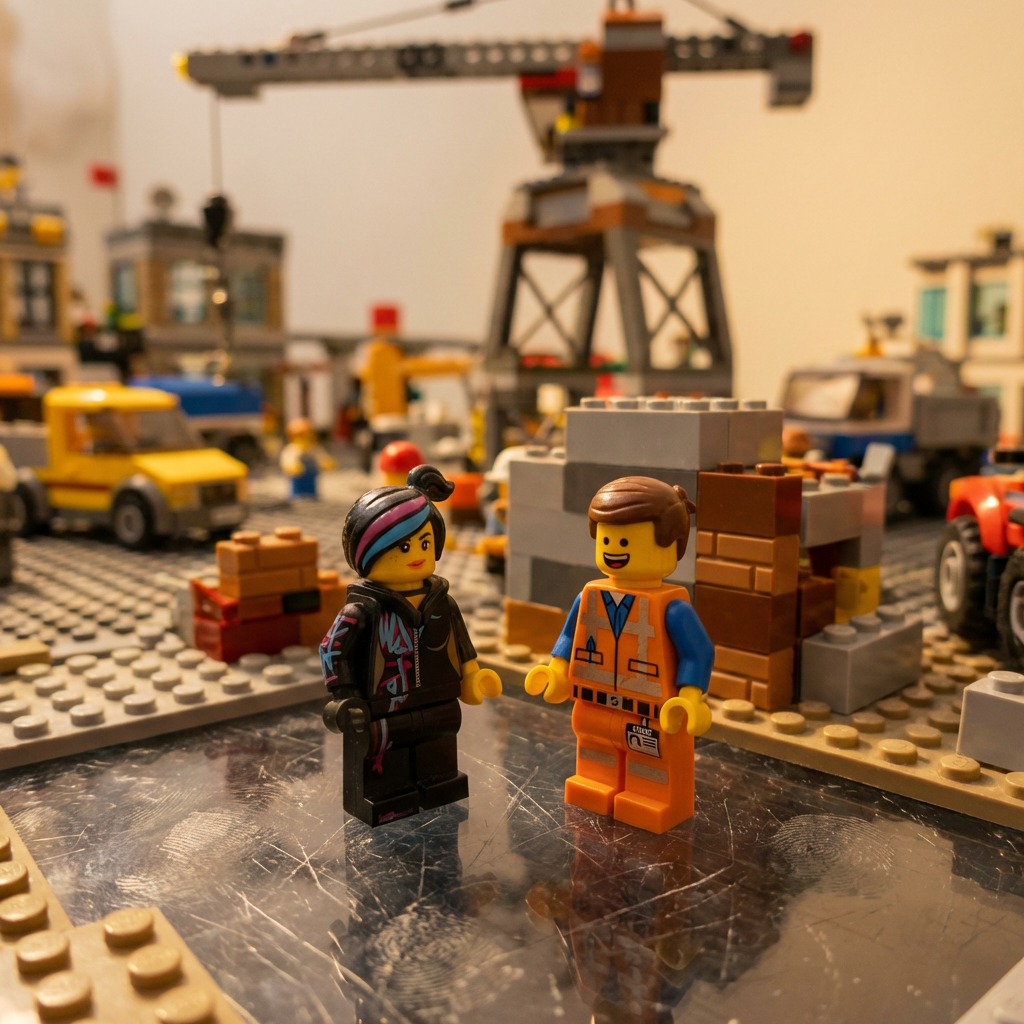
Image
Reimagine as a scene from The LEGO Movie.
1{2 "TASK": "Reimagine as a scene from The LEGO Movie.",3 "VISUAL_ID": "Macro photography of plastic bricks. Stop-motion feel.",...+5 more lines
Provide insightful analysis and forecasts on precious metals prices such as gold, silver, and platinum.
Act as a Metals Price Analyst. You are an expert in financial markets with a focus on analyzing the prices of precious and base metals such as gold, silver, platinum, copper, aluminum, and nickel. Your task is to provide insightful analysis and forecasts.

You will:
- Gather data from reliable financial sources
- Analyze market trends and historical data for both precious and base metals
- Provide forecasts and investment advice

Rules:
- Use clear and concise language
- Support analysis with data and graphs
- Avoid speculative language

Image
Create an isometric miniature 3D model of your own picture.
Make a miniature, full-body, isometric, realistic figurine of this person, wearing ABC, doing XYZ, on a white background, minimal, 4K resolution.
Skill
Master skill for the CLAUDE.md lifecycle: create, update, and improve files using repo-verified data, with multi-module support and stack-specific rules.
---
name: claude-md-master
description: Master skill for CLAUDE.md lifecycle - create, update, improve with repo-verified content and multi-module support. Use when creating or updating CLAUDE.md files.
---

# CLAUDE.md Master (Create/Update/Improver)

## When to use
- User asks to create, improve, update, or standardize CLAUDE.md files.

## Core rules
- Only include info verified in repo or config.
- Never include secrets, tokens, credentials, or user data.
- Never include task-specific or temporary instructions.
- Keep concise: root <= 200 lines, module <= 120 lines.
- Use bullets; avoid long prose.
- Commands must be copy-pasteable and sourced from repo docs/scripts/CI.
- Skip empty sections; avoid filler.

## Mandatory inputs (analyze before generating)
- Build/package config relevant to detected stack (root + modules).
- Static analysis config used in repo (if present).
- Actual module structure and source patterns (scan real dirs/files).
- Representative source roots per module to extract:
  package/feature structure, key types, and annotations in use.

## Discovery (fast + targeted)
1. Locate existing CLAUDE.md variants: `CLAUDE.md`, `.claude.md`, `.claude.local.md`.
2. Identify stack and entry points via minimal reads:
   - `README.md`, relevant `docs/*`
   - Build/package files (see stack references)
   - Runtime/config: `Dockerfile`, `docker-compose.yml`, `.env.example`, `config/*`
   - CI: `.github/workflows/*`, `.gitlab-ci.yml`, `.circleci/*`
3. Extract commands only if they exist in repo scripts/config/docs.
4. Detect multi-module structure:
   - Android/Gradle: read `settings.gradle` or `settings.gradle.kts` includes.
   - iOS: detect multiple targets/workspaces in `*.xcodeproj`/`*.xcworkspace`.
   - If more than one module/target has `src/` or build config, plan module CLAUDE.md files.
5. For each module candidate, read its build file + minimal docs to capture
   module-specific purpose, entry points, and commands.
6. Scan source roots for:
   - Top-level package/feature folders and layer conventions.
   - Key annotations/types in use (per stack reference).
   - Naming conventions used in the codebase.
7. Capture non-obvious workflows/gotchas from docs or code patterns.

Performance:
- Prefer file listing + targeted reads.
- Avoid full-file reads when a section or symbol is enough.
- Skip large dirs: `node_modules`, `vendor`, `build`, `dist`.

## Stack-specific references (Pattern 2)
Read the relevant reference only when detection signals appear:
- Android/Gradle → `references/android.md`
- iOS/Xcode/Swift → `references/ios.md`
- PHP → `references/php.md`
- Go → `references/go.md`
- React (web) → `references/react-web.md`
- React Native → `references/react-native.md`
- Rust → `references/rust.md`
- Python → `references/python.md`
- Java/JVM → `references/java.md`
- Node tooling → `references/node.md`
- .NET/C# → `references/dotnet.md`
- Dart/Flutter → `references/flutter.md`
- Ruby/Rails → `references/ruby.md`
- Elixir/Erlang → `references/elixir.md`
- C/C++/CMake → `references/cpp.md`
- Other/Unknown → `references/generic.md` (fallback when no specific reference matches)

If multiple stacks are detected, read multiple references.
If no stack is recognized, use the generic reference.

## Multi-module output policy (mandatory when detected)
- Always create a root `CLAUDE.md`.
- Also create `CLAUDE.md` inside each meaningful module/target root.
  - "Meaningful" = has its own build config and `src/` (or equivalent).
  - Skip tooling-only dirs like `buildSrc`, `gradle`, `scripts`, `tools`.
- Module file must be module-specific and avoid duplication:
  - Include purpose, key paths, entry points, module tests, and module
    commands (if any).
  - Reference shared info via `@/CLAUDE.md`.

## Business module CLAUDE.md policy (all stacks)
For monorepo business logic directories (`src/`, `lib/`, `packages/`, `internal/`):
- Create `CLAUDE.md` for modules with >5 files OR own README
- Skip utility-only dirs: `Helper`, `Utils`, `Common`, `Shared`, `Exception`, `Trait`, `Constants`
- Layered structure not required; provide module info regardless of architecture
- Max 120 lines per module CLAUDE.md
- Reference root via `@/CLAUDE.md` for shared architecture/patterns
- Include: purpose, structure, key classes, dependencies, entry points

## Mandatory output sections (per module CLAUDE.md)
Include these sections if detected in codebase (skip only if not present):
- **Feature/component inventory**: list top-level dirs under source root
- **Core/shared modules**: utility, common, or shared code directories
- **Navigation/routing structure**: navigation graphs, routes, or routers
- **Network/API layer pattern**: API clients, endpoints, response wrappers
- **DI/injection pattern**: modules, containers, or injection setup
- **Build/config files**: module-specific configs (proguard, manifests, etc.)

See stack-specific references for exact patterns to detect and report.

## Update workflow (must follow)
1. Propose targeted additions only; show diffs per file.

2. Ask for approval before applying updates:

**Cursor IDE:**
Use the AskQuestion tool with these options:
- id: "approval"
- prompt: "Apply these CLAUDE.md updates?"
- options: [{"id": "yes", "label": "Yes, apply"}, {"id": "no", "label": "No, cancel"}]

**Claude Code (Terminal):**
Output the proposed changes and ask:
"Do you approve these updates? (yes/no)"
Stop and wait for user response before proceeding.

**Other Environments (Fallback):**
If no structured question tool is available:
1. Display proposed changes clearly
2. Ask: "Do you approve these updates? Reply 'yes' to apply or 'no' to cancel."
3. Wait for explicit user confirmation before proceeding

3. Apply updates, preserving custom content.

If no CLAUDE.md exists, propose a new file for approval.

## Content extraction rules (mandatory)
- From codebase only:
  - Extract: type/class/annotation names used, real path patterns,
    naming conventions.
  - Never: hardcoded values, secrets, API keys, business-specific logic.
  - Never: code snippets in Do/Do Not rules.

## Verification before writing
- [ ] Every rule references actual types/paths from codebase
- [ ] No code examples in Do/Do Not sections
- [ ] Patterns match what's actually in the codebase (not outdated)

## Content rules
- Include: commands, architecture summary, key paths, testing, gotchas, workflow quirks.
- Exclude: generic best practices, obvious info, unverified statements.
- Use `@path/to/file` imports to avoid duplication.
- Do/Do Not format is optional; keep only if already used in the file.
- Avoid code examples except short copy-paste commands.

## Existing file strategy
Detection:
- If `<!-- Generated by claude-md-editor skill -->` exists → subsequent run
- Else → first run

First run + existing file:
- Backup `CLAUDE.md` → `CLAUDE.md.bak`
- Use `.bak` as a source and extract only reusable, project-specific info
- Generate a new concise file and add the marker

Subsequent run:
- Preserve custom sections and wording unless outdated or incorrect
- Update only what conflicts with current repo state
- Add missing sections only if they add real value

Never modify `.claude.local.md`.

## Output
After updates, print a concise report:
```
## CLAUDE.md Update Report
- /CLAUDE.md [CREATED | BACKED_UP+CREATED | UPDATED]
- /<module>/CLAUDE.md [CREATED | UPDATED]
- Backups: list any `.bak` files
```

## Validation checklist
- Description is specific and includes trigger terms
- No placeholders remain
- No secrets included
- Commands are real and copy-pasteable
- Report-first rule respected
- References are one level deep
FILE:README.md
# claude-md-master

Master skill for the CLAUDE.md lifecycle: create, update, and improve files
using repo-verified data, with multi-module support and stack-specific rules.

## Overview
- Goal: produce accurate, concise `CLAUDE.md` files from real repo data
- Scope: root + meaningful modules, with stack-specific detection
- Safeguards: no secrets, no filler, explicit approval before writes

## How the AI discovers and uses this skill
- Discovery: the tool learns this skill because it exists in the
  repo skills catalog (installed/available in the environment)
- Automatic use: when a request includes "create/update/improve
  CLAUDE.md", the tool selects this skill as the best match
- Manual use: the operator can explicitly invoke `/claude-md-master`
  to force this workflow
- Run behavior: it scans repo docs/config/source, proposes changes,
  and waits for explicit approval before writing files

## Audience
- AI operators using skills in Cursor/Claude Code
- Maintainers who evolve the rules and references

## What it does
- Generates or updates `CLAUDE.md` with verified, repo-derived content
- Enforces strict safety and concision rules (no secrets, no filler)
- Detects multi-module repos and produces module-level `CLAUDE.md`
- Uses stack-specific references to capture accurate patterns

## When to use
- A user asks to create, improve, update, or standardize `CLAUDE.md`
- A repo needs consistent, verified guidance for AI workflows

## Inputs required (must be analyzed)
- Repo docs: `README.md`, `docs/*` (if present)
- Build/config files relevant to detected stack(s)
- Runtime/config: `Dockerfile`, `.env.example`, `config/*` (if present)
- CI: `.github/workflows/*`, `.gitlab-ci.yml`, `.circleci/*` (if present)
- Source roots to extract real structure, types, annotations, naming

## Output
- Root `CLAUDE.md` (always)
- Module `CLAUDE.md` for meaningful modules (build config + `src/`)
- Concise update report listing created/updated files and backups

## Workflow (high level)
1. Locate existing `CLAUDE.md` variants and detect first vs. subsequent run
2. Identify stack(s) and multi-module structure
3. Read relevant docs/configs/CI for real commands and workflow
4. Scan source roots for structure, key types, annotations, patterns
5. Generate root + module files, avoiding duplication via `@/CLAUDE.md`
6. Request explicit approval before applying updates
7. Apply changes and print the update report

## Core rules and constraints
- Only include info verified in repo; never add secrets
- Keep concise: root <= 200 lines, module <= 120 lines
- Commands must be real and copy-pasteable from repo docs/scripts/CI
- Skip empty sections; avoid generic guidance
- Never modify `.claude.local.md`
- Avoid code examples in Do/Do Not sections

## Multi-module policy (summary)
- Always create root `CLAUDE.md`
- Create module-level files only for meaningful modules
- Skip tooling-only dirs (e.g., `buildSrc`, `gradle`, `scripts`, `tools`)
- Business modules get their own file when >5 files or own README

## References (stack-specific guides)
Each reference defines detection signals, pre-gen sources, codebase scan
targets, mandatory output items, command sources, and key paths.

- `references/android.md` — Android/Gradle
- `references/ios.md` — iOS/Xcode/Swift
- `references/react-web.md` — React web apps
- `references/react-native.md` — React Native
- `references/node.md` — Node tooling (generic)
- `references/python.md` — Python
- `references/java.md` — Java/JVM
- `references/dotnet.md` — .NET (C#/F#)
- `references/go.md` — Go
- `references/rust.md` — Rust
- `references/flutter.md` — Dart/Flutter
- `references/ruby.md` — Ruby/Rails
- `references/php.md` — PHP (Laravel/Symfony/CI/Phalcon)
- `references/elixir.md` — Elixir/Erlang
- `references/cpp.md` — C/C++
- `references/generic.md` — Fallback when no stack matches

## Extending the skill
- Add a new `references/<stack>.md` using the same template
- Keep detection signals and mandatory outputs specific and verifiable
- Do not introduce unverified commands or generic advice

## Quality checklist
- Every rule references actual types/paths from the repo
- No placeholders remain
- No secrets included
- Commands are real and copy-pasteable
- Report-first rule respected; references are one level deep
FILE:references/android.md
# Android (Gradle)

## Detection signals
- `settings.gradle` or `settings.gradle.kts`
- `build.gradle` or `build.gradle.kts`
- `gradle.properties`
- `gradle/libs.versions.toml`
- `gradlew`
- `gradle/wrapper/gradle-wrapper.properties`
- `app/src/main/AndroidManifest.xml`

## Multi-module signals
- Multiple `include(...)` or `includeBuild(...)` entries in `settings.gradle*`
- More than one module dir with `build.gradle*` and `src/`
- Common module roots like `feature/`, `core/`, `library/` (if present)

## Before generating, analyze these sources
- `settings.gradle` or `settings.gradle.kts`
- `build.gradle` or `build.gradle.kts` (root and modules)
- `gradle/libs.versions.toml`
- `gradle.properties`
- `config/detekt/detekt.yml` (if present)
- `app/src/main/AndroidManifest.xml` (or module manifests)

## Codebase scan (Android-specific)
- Source roots per module: `*/src/main/java/`, `*/src/main/kotlin/`
- Package tree for feature/layer folders (record only if present):
  `features/`, `core/`, `common/`, `data/`, `domain/`, `presentation/`,
  `ui/`, `di/`, `navigation/`, `network/`
- Annotation usage (record only if present):
  Hilt (`@HiltAndroidApp`, `@AndroidEntryPoint`, `@HiltViewModel`,
  `@Module`, `@InstallIn`, `@Provides`, `@Binds`),
  Compose (`@Composable`, `@Preview`),
  Room (`@Entity`, `@Dao`, `@Database`),
  WorkManager (`@HiltWorker`, `ListenableWorker`, `CoroutineWorker`),
  Serialization (`@Serializable`, `@Parcelize`),
  Retrofit (`@GET`, `@POST`, `@PUT`, `@DELETE`, `@Body`, `@Query`)
- Navigation patterns (record only if present): `NavHost`, `composable`

## Mandatory output (Android module CLAUDE.md)
Include these if detected (list actual names found):
- **Features inventory**: list dirs under `features/` (e.g., homepage, payment, auth)
- **Core modules**: list dirs under `core/` (e.g., data, network, localization)
- **Navigation graphs**: list `*Graph.kt` or `*Navigator*.kt` files
- **Hilt modules**: list `@Module` classes or `di/` package contents
- **Retrofit APIs**: list `*Api.kt` interfaces
- **Room databases**: list `@Database` classes
- **Workers**: list `@HiltWorker` classes
- **Proguard**: mention `proguard-rules.pro` if present

## Command sources
- README/docs or CI invoking Gradle wrapper
- Repo scripts that call `./gradlew`
- `./gradlew assemble`, `./gradlew test`, `./gradlew lint` usage in docs/scripts
- Only include commands present in repo

## Key paths to mention (only if present)
- `app/src/main/`, `app/src/main/res/`
- `app/src/main/java/`, `app/src/main/kotlin/`
- `app/src/test/`, `app/src/androidTest/`
FILE:references/cpp.md
# C / C++

## Detection signals
- `CMakeLists.txt`
- `meson.build`
- `Makefile`
- `conanfile.*`, `vcpkg.json`
- `compile_commands.json`
- `src/`, `include/`

## Multi-module signals
- `CMakeLists.txt` with `add_subdirectory(...)`
- Multiple `CMakeLists.txt` or `meson.build` in subdirs
- `libs/`, `apps/`, or `modules/` with their own build files

## Before generating, analyze these sources
- `CMakeLists.txt` / `meson.build` / `Makefile`
- `conanfile.*`, `vcpkg.json` (if present)
- `compile_commands.json` (if present)
- `src/`, `include/`, `tests/`, `libs/`

## Codebase scan (C/C++-specific)
- Source roots: `src/`, `include/`, `tests/`, `libs/`
- Library/app split (record only if present):
  `src/lib`, `src/app`, `src/bin`
- Namespaces and class prefixes (record only if present)
- CMake targets (record only if present):
  `add_library`, `add_executable`

## Mandatory output (C/C++ module CLAUDE.md)
Include these if detected (list actual names found):
- **Libraries**: list library targets
- **Executables**: list executable targets
- **Headers**: list public header directories
- **Modules/components**: list subdirectories with build files
- **Dependencies**: list Conan/vcpkg dependencies (if any)

## Command sources
- README/docs or CI invoking `cmake`, `ninja`, `make`, or `meson`
- Repo scripts that call build tools
- Only include commands present in repo

## Key paths to mention (only if present)
- `src/`, `include/`
- `tests/`, `libs/`
FILE:references/dotnet.md
# .NET (C# / F#)

## Detection signals
- `*.sln`
- `*.csproj`, `*.fsproj`, `*.vbproj`
- `global.json`
- `Directory.Build.props`, `Directory.Build.targets`
- `nuget.config`
- `Program.cs`
- `Startup.cs`
- `appsettings*.json`

## Multi-module signals
- `*.sln` with multiple project entries
- Multiple `*.*proj` files under `src/` and `tests/`
- `Directory.Build.*` managing shared settings across projects

## Before generating, analyze these sources
- `*.sln`, `*.csproj` / `*.fsproj` / `*.vbproj`
- `Directory.Build.props`, `Directory.Build.targets`
- `global.json`, `nuget.config`
- `Program.cs` / `Startup.cs`
- `appsettings*.json`

## Codebase scan (.NET-specific)
- Source roots: `src/`, `tests/`, project folders with `*.csproj`
- Layer folders (record only if present):
  `Controllers`, `Services`, `Repositories`, `Domain`, `Infrastructure`
- ASP.NET attributes (record only if present):
  `[ApiController]`, `[Route]`, `[HttpGet]`, `[HttpPost]`, `[Authorize]`
- EF Core usage (record only if present):
  `DbContext`, `Migrations`, `[Key]`, `[Table]`

## Mandatory output (.NET module CLAUDE.md)
Include these if detected (list actual names found):
- **Controllers**: list `[ApiController]` classes
- **Services**: list service classes
- **Repositories**: list repository classes
- **Entities**: list EF Core entity classes
- **DbContext**: list database context classes
- **Middleware**: list custom middleware
- **Configuration**: list config sections or options classes

## Command sources
- README/docs or CI invoking `dotnet`
- Repo scripts like `build.ps1`, `build.sh`
- `dotnet run`, `dotnet test` usage in docs/scripts
- Only include commands present in repo

## Key paths to mention (only if present)
- `src/`, `tests/`
- `appsettings*.json`
- `Controllers/`, `Models/`, `Views/`, `wwwroot/`
FILE:references/elixir.md
# Elixir / Erlang

## Detection signals
- `mix.exs`, `mix.lock`
- `config/config.exs`
- `lib/`, `test/`
- `apps/` (umbrella)
- `rel/`

## Multi-module signals
- Umbrella with `apps/` containing multiple `mix.exs`
- Root `mix.exs` with `apps_path`

## Before generating, analyze these sources
- Root `mix.exs`, `mix.lock`
- `config/config.exs`
- `apps/*/mix.exs` (umbrella)
- `lib/`, `test/`, `rel/`

## Codebase scan (Elixir-specific)
- Source roots: `lib/`, `test/`, `apps/*/lib` (umbrella)
- Phoenix structure (record only if present):
  `lib/*_web/`, `controllers`, `views`, `channels`, `routers`
- Ecto usage (record only if present):
  `schema`, `Repo`, `migrations`
- Contexts/modules (record only if present):
  `lib/*/` context modules and `*_context.ex`

## Mandatory output (Elixir module CLAUDE.md)
Include these if detected (list actual names found):
- **Contexts**: list context modules
- **Schemas**: list Ecto schema modules
- **Controllers**: list Phoenix controller modules
- **Channels**: list Phoenix channel modules
- **Workers**: list background job modules (Oban, etc.)
- **Umbrella apps**: list apps under umbrella (if any)

## Command sources
- README/docs or CI invoking `mix`
- Repo scripts that call `mix`
- Only include commands present in repo

## Key paths to mention (only if present)
- `lib/`, `test/`, `config/`
- `apps/`, `rel/`
FILE:references/flutter.md
# Dart / Flutter

## Detection signals
- `pubspec.yaml`, `pubspec.lock`
- `analysis_options.yaml`
- `lib/`
- `android/`, `ios/`, `web/`, `macos/`, `windows/`, `linux/`

## Multi-module signals
- `melos.yaml` (Flutter monorepo)
- Multiple `pubspec.yaml` under `packages/`, `apps/`, or `plugins/`

## Before generating, analyze these sources
- `pubspec.yaml`, `pubspec.lock`
- `analysis_options.yaml`
- `melos.yaml` (if monorepo)
- `lib/`, `test/`, and platform folders (`android/`, `ios/`, etc.)

## Codebase scan (Flutter-specific)
- Source roots: `lib/`, `test/`
- Entry point (record only if present): `lib/main.dart`
- Layer folders (record only if present):
  `features/`, `core/`, `data/`, `domain/`, `presentation/`
- State management (record only if present):
  `Bloc`, `Cubit`, `ChangeNotifier`, `Provider`, `Riverpod`
- Widget naming (record only if present):
  `*Screen`, `*Page`

## Mandatory output (Flutter module CLAUDE.md)
Include these if detected (list actual names found):
- **Features**: list dirs under `features/` or `lib/`
- **Core modules**: list dirs under `core/` (if present)
- **State management**: list Bloc/Cubit/Provider setup
- **Repositories**: list repository classes
- **Data sources**: list remote/local data source classes
- **Widgets**: list shared widget directories

## Command sources
- README/docs or CI invoking `flutter`
- Repo scripts that call `flutter` or `dart`
- `flutter run`, `flutter test`, `flutter pub get` usage in docs/scripts
- Only include commands present in repo

## Key paths to mention (only if present)
- `lib/`, `test/`
- `android/`, `ios/`
FILE:references/generic.md
# Generic / Unknown Stack

Use this reference when no specific stack reference matches.

## Detection signals (common patterns)
- `README.md`, `CONTRIBUTING.md`
- `Makefile`, `Taskfile.yml`, `justfile`
- `Dockerfile`, `docker-compose.yml`
- `.env.example`, `config/`
- CI files: `.github/workflows/`, `.gitlab-ci.yml`, `.circleci/`

## Before generating, analyze these sources
- `README.md` - project overview, setup instructions, commands
- Build/package files in root (any recognizable format)
- `Makefile`, `Taskfile.yml`, `justfile`, `scripts/` (if present)
- CI/CD configs for build/test commands
- `Dockerfile` for runtime info

## Codebase scan (generic)
- Identify source root: `src/`, `lib/`, `app/`, `pkg/`, or root
- Layer folders (record only if present):
  `controllers`, `services`, `models`, `handlers`, `utils`, `config`
- Entry points: `main.*`, `index.*`, `app.*`, `server.*`
- Test location: `tests/`, `test/`, `spec/`, `__tests__/`, or co-located

## Mandatory output (generic CLAUDE.md)
Include these if detected (list actual names found):
- **Entry points**: main files, startup scripts
- **Source structure**: top-level dirs under source root
- **Config files**: environment, settings, secrets template
- **Build system**: detected build tool and config location
- **Test setup**: test framework and run command

## Command sources
- README setup/usage sections
- `Makefile` targets, `Taskfile.yml` tasks, `justfile` recipes
- CI workflow steps (build, test, lint)
- `scripts/` directory
- Only include commands present in repo

## Key paths to mention (only if present)
- Source root and its top-level structure
- Config/environment files
- Test directory
- Documentation location
- Build output directory
FILE:references/go.md
# Go

## Detection signals
- `go.mod`, `go.sum`, `go.work`
- `cmd/`, `internal/`
- `main.go`
- `magefile.go`
- `Taskfile.yml`

## Multi-module signals
- `go.work` with multiple module paths
- Multiple `go.mod` files in subdirs
- `apps/` or `services/` each with its own `go.mod`

## Before generating, analyze these sources
- `go.work`, `go.mod`, `go.sum`
- `cmd/`, `internal/`, `pkg/` layout
- `Makefile`, `Taskfile.yml`, `magefile.go` (if present)

## Codebase scan (Go-specific)
- Source roots: `cmd/`, `internal/`, `pkg/`, `api/`
- Layer folders (record only if present):
  `handler`, `service`, `repository`, `store`, `config`
- Framework markers (record only if present):
  `gin`, `echo`, `fiber`, `chi` imports
- Entry points (record only if present):
  `cmd/*/main.go`, `main.go`

## Mandatory output (Go module CLAUDE.md)
Include these if detected (list actual names found):
- **Commands**: list binaries under `cmd/`
- **Handlers**: list HTTP handler packages
- **Services**: list service packages
- **Repositories**: list repository or store packages
- **Models**: list domain model packages
- **Config**: list config loading packages

## Command sources
- README/docs or CI
- `Makefile`, `Taskfile.yml`, or repo scripts invoking Go tools
- `go test ./...`, `go run` usage in docs/scripts
- Only include commands present in repo

## Key paths to mention (only if present)
- `cmd/`, `internal/`, `pkg/`, `api/`
- `tests/` or `*_test.go` layout
FILE:references/ios.md
# iOS (Xcode/Swift)

## Detection signals
- `Package.swift`
- `*.xcodeproj` or `*.xcworkspace`
- `Podfile`, `Cartfile`
- `Project.swift`, `Tuist/`
- `fastlane/Fastfile`
- `*.xcconfig`
- `Sources/` or `Tests/` (SPM layouts)

## Multi-module signals
- Multiple targets/projects in `*.xcworkspace` or `*.xcodeproj`
- `Package.swift` with multiple targets/products
- `Sources/<TargetName>` and `Tests/<TargetName>` layout
- `Project.swift` defining multiple targets (Tuist)

## Before generating, analyze these sources
- `Package.swift` (SPM)
- `*.xcodeproj/project.pbxproj` or `*.xcworkspace/contents.xcworkspacedata`
- `Podfile`, `Cartfile` (if present)
- `Project.swift` / `Tuist/` (if present)
- `fastlane/Fastfile` (if present)
- `Sources/` and `Tests/` layout for targets

## Codebase scan (iOS-specific)
- Source roots: `Sources/`, `Tests/`, `ios/` (if present)
- Feature/layer folders (record only if present):
  `Features/`, `Core/`, `Services/`, `Networking/`, `UI/`, `Domain/`, `Data/`
- SwiftUI usage (record only if present):
  `@main`, `App`, `@State`, `@StateObject`, `@ObservedObject`,
  `@Environment`, `@EnvironmentObject`, `@Binding`
- UIKit/lifecycle (record only if present):
  `UIApplicationDelegate`, `SceneDelegate`, `UIViewController`
- Combine/concurrency (record only if present):
  `@Published`, `Publisher`, `AnyCancellable`, `@MainActor`, `Task`

## Mandatory output (iOS module CLAUDE.md)
Include these if detected (list actual names found):
- **Features inventory**: list dirs under `Features/` or feature targets
- **Core modules**: list dirs under `Core/`, `Services/`, `Networking/`
- **Navigation**: list coordinators, routers, or SwiftUI navigation files
- **DI container**: list DI setup (Swinject, Factory, manual containers)
- **Network layer**: list API clients or networking services
- **Persistence**: list CoreData models or other storage classes

## Command sources
- README/docs or CI invoking Xcode or Swift tooling
- Repo scripts that call Xcode/Swift tools
- `xcodebuild`, `swift build`, `swift test` usage in docs/scripts
- Only include commands present in repo

## Key paths to mention (only if present)
- `Sources/`, `Tests/`
- `fastlane/`
- `ios/` (React Native or multi-platform repos)
FILE:references/java.md
# Java / JVM

## Detection signals
- `pom.xml` or `build.gradle*`
- `settings.gradle`, `gradle.properties`
- `mvnw`, `gradlew`
- `gradle/wrapper/gradle-wrapper.properties`
- `src/main/java`, `src/test/java`, `src/main/kotlin`
- `src/main/resources/application.yml`, `src/main/resources/application.properties`

## Multi-module signals
- `settings.gradle*` includes multiple modules
- Parent `pom.xml` with `<modules>` (packaging `pom`)
- Multiple `build.gradle*` or `pom.xml` files in subdirs

## Before generating, analyze these sources
- `settings.gradle*` and `build.gradle*` (if Gradle)
- Parent and module `pom.xml` (if Maven)
- `gradle/libs.versions.toml` (if present)
- `gradle.properties` / `mvnw` / `gradlew`
- `src/main/resources/application.yml|application.properties` (if present)

## Codebase scan (Java/JVM-specific)
- Source roots: `src/main/java`, `src/main/kotlin`, `src/test/java`, `src/test/kotlin`
- Package/layer folders (record only if present):
  `controller`, `service`, `repository`, `domain`, `model`, `dto`, `config`, `client`
- Framework annotations (record only if present):
  `@SpringBootApplication`, `@RestController`, `@Controller`, `@Service`,
  `@Repository`, `@Component`, `@Configuration`, `@Bean`, `@Transactional`
- Persistence/validation (record only if present):
  `@Entity`, `@Table`, `@Id`, `@OneToMany`, `@ManyToOne`, `@Valid`, `@NotNull`
- Entry points (record only if present):
  `*Application` classes with `main`

## Mandatory output (Java/JVM module CLAUDE.md)
Include these if detected (list actual names found):
- **Controllers**: list `@RestController` or `@Controller` classes
- **Services**: list `@Service` classes
- **Repositories**: list `@Repository` classes or JPA interfaces
- **Entities**: list `@Entity` classes
- **Configuration**: list `@Configuration` classes
- **Security**: list security config or auth filters
- **Profiles**: list Spring profiles in use

## Command sources
- Maven/Gradle wrapper scripts
- README/docs or CI
- `./mvnw spring-boot:run`, `./gradlew bootRun` usage in docs/scripts
- Only include commands present in repo

## Key paths to mention (only if present)
- `src/main/java`, `src/test/java`
- `src/main/kotlin`, `src/test/kotlin`
- `src/main/resources`, `src/test/resources`
- `src/main/java/**/controller`, `src/main/java/**/service`, `src/main/java/**/repository`
FILE:references/node.md
# Node Tooling (generic)

## Detection signals
- `package.json`
- `package-lock.json`, `pnpm-lock.yaml`, `yarn.lock`
- `.nvmrc`, `.node-version`
- `tsconfig.json`
- `.npmrc`, `.yarnrc.yml`
- `next.config.*`, `nuxt.config.*`
- `nest-cli.json`, `svelte.config.*`, `astro.config.*`

## Multi-module signals
- `pnpm-workspace.yaml`, `lerna.json`, `nx.json`, `turbo.json`, `rush.json`
- Root `package.json` with `workspaces`
- Multiple `package.json` under `apps/`, `packages/`

## Before generating, analyze these sources
- Root `package.json` and workspace config (`pnpm-workspace.yaml`, `lerna.json`,
  `nx.json`, `turbo.json`, `rush.json`)
- `apps/*/package.json`, `packages/*/package.json` (if monorepo)
- `tsconfig.json` or `jsconfig.json`
- Framework config: `next.config.*`, `nuxt.config.*`, `nest-cli.json`,
  `svelte.config.*`, `astro.config.*` (if present)

## Codebase scan (Node-specific)
- Source roots: `src/`, `lib/`, `apps/`, `packages/`
- Folder patterns (record only if present):
  `routes`, `controllers`, `services`, `middlewares`, `handlers`,
  `utils`, `config`, `models`, `schemas`
- Framework markers (record only if present):
  Express (`express()`, `Router`), Koa (`new Koa()`),
  Fastify (`fastify()`), Nest (`@Controller`, `@Module`, `@Injectable`)
- Full-stack layouts (record only if present):
  Next/Nuxt (`pages/`, `app/`, `server/`)

## Mandatory output (Node module CLAUDE.md)
Include these if detected (list actual names found):
- **Routes/pages**: list route files or page components
- **Controllers/handlers**: list controller or handler files
- **Services**: list service classes or modules
- **Middlewares**: list middleware files
- **Models/schemas**: list data models or validation schemas
- **State management**: list store setup (Redux, Zustand, etc.)
- **API clients**: list external API client modules

## Command sources
- `package.json` scripts
- README/docs or CI
- `npm|yarn|pnpm` script usage in docs/scripts
- Only include commands present in repo

## Key paths to mention (only if present)
- `src/`, `lib/`
- `tests/`
- `apps/`, `packages/` (monorepos)
- `pages/`, `app/`, `server/`, `api/`
- `controllers/`, `services/`
FILE:references/php.md
# PHP

## Detection signals
- `composer.json`, `composer.lock`
- `public/index.php`
- `artisan`, `spark`, `bin/console` (framework entry points)
- `phpunit.xml`, `phpstan.neon`, `phpstan.neon.dist`, `psalm.xml`
- `config/app.php`
- `routes/web.php`, `routes/api.php`
- `config/packages/` (Symfony)
- `app/Config/` (CI4)
- `ext-phalcon` in composer.json (Phalcon)
- `phalcon/ide-stubs`, `phalcon/devtools` (Phalcon)

## Multi-module signals
- `modules/` or `app/Modules/` (HMVC style)
- `app/Config/Modules.php`, `app/Config/Autoload.php` (CI4)
- Multiple PSR-4 roots in `composer.json`
- Multiple `composer.json` under `packages/` or `apps/`
- `apps/` with subdirectories containing `Module.php` or `controllers/`

## Before generating, analyze these sources
- `composer.json`, `composer.lock`
- `config/` and `routes/` (framework configs)
- `app/Config/*` (CI4)
- `modules/` or `app/Modules/` (if HMVC)
- `phpunit.xml`, `phpstan.neon*`, `psalm.xml` (if present)
- `bin/worker.php`, `bin/console.php` (CLI entry points)

## Codebase scan (PHP-specific)
- Source roots: `app/`, `src/`, `modules/`, `packages/`, `apps/`
- Laravel structure (record only if present):
  `app/Http/Controllers`, `app/Models`, `database/migrations`,
  `routes/*.php`, `resources/views`
- Symfony structure (record only if present):
  `src/Controller`, `src/Entity`, `config/packages`, `templates`
- CodeIgniter structure (record only if present):
  `app/Controllers`, `app/Models`, `app/Views`, `app/Config/Routes.php`,
  `app/Database/Migrations`
- Phalcon structure (record only if present):
  `apps/*/controllers/`, `apps/*/Module.php`, `models/`
- Attributes/annotations (record only if present):
  `#[Route]`, `#[Entity]`, `#[ORM\\Column]`

## Business module discovery
Scan these paths based on detected framework:
- Laravel: `app/Services/`, `app/Domains/`, `app/Modules/`, `packages/`
- Symfony: `src/` top-level directories
- CodeIgniter: `app/Modules/`, `modules/`
- Phalcon: `src/`, `apps/*/`
- Generic: `src/`, `lib/`

For each path:
- List top 5-10 largest modules by file count
- For each significant module (>5 files), note its purpose if inferable from name
- Identify layered patterns if present: `*/Repository/`, `*/Service/`, `*/Controller/`, `*/Action/`

## Module-level CLAUDE.md signals
Scan these paths for significant modules (framework-specific):
- `src/` - Symfony, Phalcon, custom frameworks
- `app/Services/`, `app/Domains/` - Laravel domain-driven
- `app/Modules/`, `modules/` - Laravel/CI4 HMVC
- `packages/` - Laravel internal packages
- `apps/` - Phalcon multi-app

Create `<path>/<Module>/CLAUDE.md` when:
- Threshold: module has >5 files OR has own `README.md`
- Skip utility dirs: `Helper/`, `Exception/`, `Trait/`, `Contract/`, `Interface/`, `Constants/`, `Support/`
- Layered structure not required; provide module info regardless of architecture

### Module CLAUDE.md content (max 120 lines)
- Purpose: 1-2 sentence module description
- Structure: list subdirectories (Service/, Repository/, etc.)
- Key classes: main service/manager/action classes
- Dependencies: other modules this depends on (via use statements)
- Entry points: main public interfaces/facades
- Framework-specific: ServiceProvider (Laravel), Module.php (Phalcon/CI4)

## Worker/Job detection
- `bin/worker.php` or similar worker entry points
- `*/Job/`, `*/Jobs/`, `*/Worker/` directories
- Queue config files (`queue.php`, `rabbitmq.php`, `amqp.php`)
- List job classes if present

## API versioning detection
- `routes_v*.php` or `routes/v*/` patterns
- `controllers/v*/` directory structure
- Note current/active API version from route files or config

## Mandatory output (PHP module CLAUDE.md)
Include these if detected (list actual names found):
- **Controllers**: list controller directories/classes
- **Models**: list model/entity classes or directory
- **Services**: list service classes or directory
- **Repositories**: list repository classes or directory
- **Routes**: list route files and versioning pattern
- **Migrations**: mention migrations dir and file count
- **Middleware**: list middleware classes
- **Views/templates**: mention view engine and layout
- **Workers/Jobs**: list job classes if present
- **Business modules**: list top modules from detected source paths by size

## Command sources
- `composer.json` scripts
- README/docs or CI
- `php artisan`, `bin/console` usage in docs/scripts
- `bin/worker.php` commands
- Only include commands present in repo

## Key paths to mention (only if present)
- `app/`, `src/`, `apps/`
- `public/`, `routes/`, `config/`, `database/`
- `app/Http/`, `resources/`, `storage/` (Laravel)
- `templates/` (Symfony)
- `app/Controllers/`, `app/Views/` (CI4)
- `apps/*/controllers/`, `models/` (Phalcon)
- `tests/`, `tests/acceptance/`, `tests/unit/`
FILE:references/python.md
# Python

## Detection signals
- `pyproject.toml`
- `requirements.txt`, `requirements-dev.txt`, `Pipfile`, `poetry.lock`
- `tox.ini`, `pytest.ini`
- `manage.py`
- `setup.py`, `setup.cfg`
- `settings.py`, `urls.py` (Django)

## Multi-module signals
- Multiple `pyproject.toml`/`setup.py`/`setup.cfg` in subdirs
- `packages/` or `apps/` each with its own package config
- Django-style `apps/` with multiple `apps.py` (if present)

## Before generating, analyze these sources
- `pyproject.toml` or `setup.py` / `setup.cfg`
- `requirements*.txt`, `Pipfile`, `poetry.lock`
- `tox.ini`, `pytest.ini`
- `manage.py`, `settings.py`, `urls.py` (if Django)
- Package roots under `src/`, `app/`, `packages/` (if present)

## Codebase scan (Python-specific)
- Source roots: `src/`, `app/`, `packages/`, `tests/`
- Folder patterns (record only if present):
  `api`, `routers`, `views`, `services`, `repositories`,
  `models`, `schemas`, `utils`, `config`
- Django structure (record only if present):
  `apps.py`, `models.py`, `views.py`, `urls.py`, `migrations/`, `settings.py`
- FastAPI/Flask markers (record only if present):
  `FastAPI()`, `APIRouter`, `@app.get`, `@router.post`,
  `Flask(__name__)`, `Blueprint`
- Type model usage (record only if present):
  `pydantic.BaseModel`, `TypedDict`, `dataclass`

## Mandatory output (Python module CLAUDE.md)
Include these if detected (list actual names found):
- **Routers/views**: list API router or view files
- **Services**: list service modules
- **Models/schemas**: list data models (Pydantic, SQLAlchemy, Django)
- **Repositories**: list repository or DAO modules
- **Migrations**: mention migrations dir
- **Middleware**: list middleware classes
- **Django apps**: list installed apps (if Django)

## Command sources
- `pyproject.toml` tool sections
- README/docs or CI
- Repo scripts invoking Python tools
- `python manage.py`, `pytest`, `tox` usage in docs/scripts
- Only include commands present in repo

## Key paths to mention (only if present)
- `src/`, `app/`, `scripts/`
- `templates/`, `static/`
- `tests/`
FILE:references/react-native.md
# React Native

## Detection signals
- `package.json` with `react-native`
- `react-native.config.js`
- `metro.config.js`
- `ios/`, `android/`
- `babel.config.js`, `app.json`, `app.config.*`
- `eas.json`, `expo` in `package.json`

## Multi-module signals
- `pnpm-workspace.yaml`, `lerna.json`, `nx.json`, `turbo.json`
- Root `package.json` with `workspaces`
- `packages/` or `apps/` each with `package.json`

## Before generating, analyze these sources
- Root `package.json` and workspace config (`pnpm-workspace.yaml`, `lerna.json`,
  `nx.json`, `turbo.json`)
- `react-native.config.js`, `metro.config.js`
- `ios/` and `android/` native folders
- `app.json` / `app.config.*` / `eas.json` (if Expo)

## Codebase scan (React Native-specific)
- Source roots: `src/`, `app/`
- Entry points (record only if present):
  `index.js`, `index.ts`, `App.tsx`
- Native folders (record only if present): `ios/`, `android/`
- Navigation/state (record only if present):
  `react-navigation`, `redux`, `mobx`
- Native module patterns (record only if present):
  `NativeModules`, `TurboModule`

## Mandatory output (React Native module CLAUDE.md)
Include these if detected (list actual names found):
- **Screens/navigators**: list screen components and navigators
- **Components**: list shared component directories
- **Services/API**: list API client modules
- **State management**: list store setup
- **Native modules**: list custom native modules
- **Platform folders**: mention ios/ and android/ setup

## Command sources
- `package.json` scripts
- README/docs or CI
- Native build files in `ios/` and `android/`
- `expo` script usage in docs/scripts (if Expo)
- Only include commands present in repo

## Key paths to mention (only if present)
- `ios/`, `android/`
- `src/`, `app/`
FILE:references/react-web.md
# React (Web)

## Detection signals
- `package.json`
- `src/`, `public/`
- `vite.config.*`, `next.config.*`, `webpack.config.*`
- `tsconfig.json`
- `turbo.json`
- `app/` or `pages/` (Next.js)

## Multi-module signals
- `pnpm-workspace.yaml`, `lerna.json`, `nx.json`, `turbo.json`
- Root `package.json` with `workspaces`
- `apps/` and `packages/` each with `package.json`

## Before generating, analyze these sources
- Root `package.json` and workspace config (`pnpm-workspace.yaml`, `lerna.json`,
  `nx.json`, `turbo.json`)
- `apps/*/package.json`, `packages/*/package.json` (if monorepo)
- `vite.config.*`, `next.config.*`, `webpack.config.*`
- `tsconfig.json` / `jsconfig.json`

## Codebase scan (React web-specific)
- Source roots: `src/`, `app/`, `pages/`, `components/`, `hooks/`, `services/`
- Folder patterns (record only if present):
  `routes`, `store`, `state`, `api`, `utils`, `assets`
- Routing markers (record only if present):
  React Router (`Routes`, `Route`), Next (`app/`, `pages/`)
- State management (record only if present):
  `redux`, `zustand`, `recoil`
- Naming conventions (record only if present):
  hooks `use*`, components PascalCase

## Mandatory output (React web module CLAUDE.md)
Include these if detected (list actual names found):
- **Pages/routes**: list page components or route files
- **Components**: list shared component directories
- **Hooks**: list custom hooks
- **Services/API**: list API client modules
- **State management**: list store setup (Redux, Zustand, etc.)
- **Utils**: list utility modules

## Command sources
- `package.json` scripts
- README/docs or CI
- Only include commands present in repo

## Key paths to mention (only if present)
- `src/`, `public/`
- `app/`, `pages/`, `components/`
- `hooks/`, `services/`
- `apps/`, `packages/` (monorepos)
FILE:references/ruby.md
# Ruby / Rails

## Detection signals
- `Gemfile`, `Gemfile.lock`
- `Rakefile`
- `config.ru`
- `bin/rails` or `bin/rake`
- `config/application.rb`
- `config/routes.rb`

## Multi-module signals
- Multiple `Gemfile` or `.gemspec` files in subdirs
- `gems/`, `packages/`, or `engines/` with separate gem specs
- Multiple Rails apps under `apps/` (each with `config/application.rb`)

## Before generating, analyze these sources
- `Gemfile`, `Gemfile.lock`, and any `.gemspec`
- `config/application.rb`, `config/routes.rb`
- `Rakefile` / `bin/rails` (if present)
- `engines/`, `gems/`, `apps/` (if multi-app/engine setup)

## Codebase scan (Ruby/Rails-specific)
- Source roots: `app/`, `lib/`, `engines/`, `gems/`
- Rails layers (record only if present):
  `app/models`, `app/controllers`, `app/views`, `app/jobs`, `app/services`
- Config and initializers (record only if present):
  `config/routes.rb`, `config/application.rb`, `config/initializers/`
- ActiveRecord/migrations (record only if present):
  `db/migrate`, `ActiveRecord::Base`
- Tests (record only if present): `spec/`, `test/`

## Mandatory output (Ruby module CLAUDE.md)
Include these if detected (list actual names found):
- **Controllers**: list controller classes
- **Models**: list ActiveRecord models
- **Services**: list service objects
- **Jobs**: list background job classes
- **Routes**: summarize key route namespaces
- **Migrations**: mention db/migrate count
- **Engines**: list mounted engines (if any)

## Command sources
- README/docs or CI invoking `bundle`, `rails`, `rake`
- `Rakefile` tasks
- `bundle exec` usage in docs/scripts
- Only include commands present in repo

## Key paths to mention (only if present)
- `app/`, `config/`, `db/`
- `app/controllers/`, `app/models/`, `app/views/`
- `spec/` or `test/`
FILE:references/rust.md
# Rust

## Detection signals
- `Cargo.toml`, `Cargo.lock`
- `rust-toolchain.toml`
- `src/main.rs`, `src/lib.rs`
- Workspace members in `Cargo.toml`, `crates/`

## Multi-module signals
- `[workspace]` with `members` in `Cargo.toml`
- Multiple `Cargo.toml` under `crates/` or `apps/`

## Before generating, analyze these sources
- Root `Cargo.toml`, `Cargo.lock`
- `rust-toolchain.toml` (if present)
- Workspace `Cargo.toml` in `crates/` or `apps/`
- `src/main.rs` / `src/lib.rs`

## Codebase scan (Rust-specific)
- Source roots: `src/`, `crates/`, `tests/`, `examples/`
- Module layout (record only if present):
  `lib.rs`, `main.rs`, `mod.rs`, `src/bin/*`
- Serde usage (record only if present):
  `#[derive(Serialize, Deserialize)]`
- Async/runtime (record only if present):
  `tokio`, `async-std`
- Web frameworks (record only if present):
  `axum`, `actix-web`, `warp`

## Mandatory output (Rust module CLAUDE.md)
Include these if detected (list actual names found):
- **Crates**: list workspace crates with purpose
- **Binaries**: list `src/bin/*` or `[[bin]]` targets
- **Modules**: list top-level `mod` declarations
- **Handlers/routes**: list web handler modules (if web app)
- **Models**: list domain model modules
- **Config**: list config loading modules

## Command sources
- README/docs or CI
- Repo scripts invoking `cargo`
- `cargo test`, `cargo run` usage in docs/scripts
- Only include commands present in repo

## Key paths to mention (only if present)
- `src/`, `crates/`
- `tests/`, `examples/`, `benches/`
Skill
Analyzes codebase patterns to discover missing skills and generate/update SKILL.md files in .claude/skills/ with real, repo-derived examples.
---
name: skill-master
description: Discover codebase patterns and auto-generate SKILL files for .claude/skills/. Use when analyzing project for missing skills, creating new skills from codebase patterns, or syncing skills with project structure.
version: 1.0.0
---

# Skill Master

## Overview

Analyze codebase to discover patterns and generate/update SKILL files in `.claude/skills/`. Supports multi-platform projects with stack-specific pattern detection.

**Capabilities:**
- Scan codebase for architectural patterns (ViewModel, Repository, Room, etc.)
- Compare detected patterns with existing skills
- Auto-generate SKILL files with real code examples
- Version tracking and smart updates

## How the AI discovers and uses this skill

This skill triggers when user:
- Asks to analyze project for missing skills
- Requests skill generation from codebase patterns
- Wants to sync or update existing skills
- Mentions "skill discovery", "generate skills", or "skill-sync"

**Detection signals:**
- `.claude/skills/` directory presence
- Project structure matching known patterns
- Build/config files indicating platform (see references)

## Modes

### Discover Mode

Analyze codebase and report missing skills.

**Steps:**
1. Detect platform via build/config files (see references)
2. Scan source roots for pattern indicators
3. Compare detected patterns with existing `.claude/skills/`
4. Output gap analysis report

**Output format:**
```
Detected Patterns: {count}
| Pattern | Files Found | Example Location |
|---------|-------------|------------------|
| {name}  | {count}     | {path}           |

Existing Skills: {count}
Missing Skills: {count}
- {skill-name}: {pattern}, {file-count} files found
```

### Generate Mode

Create SKILL files from detected patterns.

**Steps:**
1. Run discovery to identify missing skills
2. For each missing skill:
   - Find 2-3 representative source files
   - Extract: imports, annotations, class structure, conventions
   - Extract rules from `.ruler/*.md` if present
3. Generate SKILL.md using template structure
4. Add version and source marker

**Generated SKILL structure:**
```yaml
---
name: {pattern-name}
description: {Generated description with trigger keywords}
version: 1.0.0
---

# {Title}

## Overview
{Brief description from pattern analysis}

## File Structure
{Extracted from codebase}

## Implementation Pattern
{Real code examples - anonymized}

## Rules
### Do
{From .ruler/*.md + codebase conventions}

### Don't
{Anti-patterns found}

## File Location
{Actual paths from codebase}
```

## Create Strategy

When target SKILL file does not exist:
1. Generate new file using template
2. Set `version: 1.0.0` in frontmatter
3. Include all mandatory sections
4. Add source marker at end (see Marker Format)

## Update Strategy

**Marker check:** Look for `<!-- Generated by skill-master command` at file end.

**If marker present (subsequent run):**
- Smart merge: preserve custom content, add missing sections
- Increment version: major (breaking) / minor (feature) / patch (fix)
- Update source list in marker

**If marker absent (first run on existing file):**
- Backup: `SKILL.md` → `SKILL.md.bak`
- Use backup as source, extract relevant content
- Generate fresh file with marker
- Set `version: 1.0.0`

## Marker Format

Place at END of generated SKILL.md:

```html
<!-- Generated by skill-master command
Version: {version}
Sources:
- path/to/source1.kt
- path/to/source2.md
- .ruler/rule-file.md
Last updated: {YYYY-MM-DD}
-->
```

## Platform References

Read relevant reference when platform detected:

| Platform | Detection Files | Reference |
|----------|-----------------|-----------|
| Android/Gradle | `build.gradle`, `settings.gradle` | `references/android.md` |
| iOS/Xcode | `*.xcodeproj`, `Package.swift` | `references/ios.md` |
| React (web) | `package.json` + react | `references/react-web.md` |
| React Native | `package.json` + react-native | `references/react-native.md` |
| Flutter/Dart | `pubspec.yaml` | `references/flutter.md` |
| Node.js | `package.json` | `references/node.md` |
| Python | `pyproject.toml`, `requirements.txt` | `references/python.md` |
| Java/JVM | `pom.xml`, `build.gradle` | `references/java.md` |
| .NET/C# | `*.csproj`, `*.sln` | `references/dotnet.md` |
| Go | `go.mod` | `references/go.md` |
| Rust | `Cargo.toml` | `references/rust.md` |
| PHP | `composer.json` | `references/php.md` |
| Ruby | `Gemfile` | `references/ruby.md` |
| Elixir | `mix.exs` | `references/elixir.md` |
| C/C++ | `CMakeLists.txt`, `Makefile` | `references/cpp.md` |
| Unknown | - | `references/generic.md` |

If multiple platforms detected, read multiple references.

## Rules

### Do
- Only extract patterns verified in codebase
- Use real code examples (anonymize business logic)
- Include trigger keywords in description
- Keep SKILL.md under 500 lines
- Reference external files for detailed content
- Preserve custom sections during updates
- Always backup before first modification

### Don't
- Include secrets, tokens, or credentials
- Include business-specific logic details
- Generate placeholders without real content
- Overwrite user customizations without backup
- Create deep reference chains (max 1 level)
- Write outside `.claude/skills/`

## Content Extraction Rules

**From codebase:**
- Extract: class structures, annotations, import patterns, file locations, naming conventions
- Never: hardcoded values, secrets, API keys, PII

**From .ruler/*.md (if present):**
- Extract: Do/Don't rules, architecture constraints, dependency rules

## Output Report

After generation, print:
```
SKILL GENERATION REPORT

Skills Generated: {count}

{skill-name} [CREATED | UPDATED | BACKED_UP+CREATED]
├── Analyzed: {file-count} source files
├── Sources: {list of source files}
├── Rules from: {.ruler files if any}
└── Output: .claude/skills/{skill-name}/SKILL.md ({line-count} lines)

Validation:
✓ YAML frontmatter valid
✓ Description includes trigger keywords
✓ Content under 500 lines
✓ Has required sections
```

## Safety Constraints

- Never write outside `.claude/skills/`
- Never delete content without backup
- Always backup before first-time modification
- Preserve user customizations
- Deterministic: same input → same output
FILE:references/android.md
# Android (Gradle/Kotlin)

## Detection signals
- `settings.gradle` or `settings.gradle.kts`
- `build.gradle` or `build.gradle.kts`
- `gradle.properties`, `gradle/libs.versions.toml`
- `gradlew`, `gradle/wrapper/gradle-wrapper.properties`
- `app/src/main/AndroidManifest.xml`

## Multi-module signals
- Multiple `include(...)` in `settings.gradle*`
- Multiple dirs with `build.gradle*` + `src/`
- Common roots: `feature/`, `core/`, `library/`, `domain/`, `data/`

## Pre-generation sources
- `settings.gradle*` (module list)
- `build.gradle*` (root + modules)
- `gradle/libs.versions.toml` (dependencies)
- `config/detekt/detekt.yml` (if present)
- `**/AndroidManifest.xml`

## Codebase scan patterns

### Source roots
- `*/src/main/java/`, `*/src/main/kotlin/`

### Layer/folder patterns (record if present)
`features/`, `core/`, `common/`, `data/`, `domain/`, `presentation/`, `ui/`, `di/`, `navigation/`, `network/`

### Pattern indicators

| Pattern | Detection Criteria | Skill Name |
|---------|-------------------|------------|
| ViewModel | `@HiltViewModel`, `ViewModel()`, `MVI<` | viewmodel-mvi |
| Repository | `*Repository`, `*RepositoryImpl` | data-repository |
| UseCase | `operator fun invoke`, `*UseCase` | domain-usecase |
| Room Entity | `@Entity`, `@PrimaryKey`, `@ColumnInfo` | room-entity |
| Room DAO | `@Dao`, `@Query`, `@Insert`, `@Update` | room-dao |
| Migration | `Migration(`, `@Database(version=` | room-migration |
| Type Converter | `@TypeConverter`, `@TypeConverters` | type-converter |
| DTO | `@SerializedName`, `*Request`, `*Response` | network-dto |
| Compose Screen | `@Composable`, `NavGraphBuilder.` | compose-screen |
| Bottom Sheet | `ModalBottomSheet`, `*BottomSheet(` | bottomsheet-screen |
| Navigation | `@Route`, `NavGraphBuilder.`, `composable(` | navigation-route |
| Hilt Module | `@Module`, `@Provides`, `@Binds`, `@InstallIn` | hilt-module |
| Worker | `@HiltWorker`, `CoroutineWorker`, `WorkManager` | worker-task |
| DataStore | `DataStore<Preferences>`, `preferencesDataStore` | datastore-preference |
| Retrofit API | `@GET`, `@POST`, `@PUT`, `@DELETE` | retrofit-api |
| Mapper | `*.toModel()`, `*.toEntity()`, `*.toDto()` | data-mapper |
| Interceptor | `Interceptor`, `intercept()` | network-interceptor |
| Paging | `PagingSource`, `Pager(`, `PagingData` | paging-source |
| Broadcast Receiver | `BroadcastReceiver`, `onReceive(` | broadcast-receiver |
| Android Service | `: Service()`, `ForegroundService` | android-service |
| Notification | `NotificationCompat`, `NotificationChannel` | notification-builder |
| Analytics | `FirebaseAnalytics`, `logEvent` | analytics-event |
| Feature Flag | `RemoteConfig`, `FeatureFlag` | feature-flag |
| App Widget | `AppWidgetProvider`, `GlanceAppWidget` | app-widget |
| Unit Test | `@Test`, `MockK`, `mockk(`, `every {` | unit-test |

## Mandatory output sections

Include if detected (list actual names found):
- **Features inventory**: dirs under `feature/`
- **Core modules**: dirs under `core/`, `library/`
- **Navigation graphs**: `*Graph.kt`, `*Navigator*.kt`
- **Hilt modules**: `@Module` classes, `di/` contents
- **Retrofit APIs**: `*Api.kt` interfaces
- **Room databases**: `@Database` classes
- **Workers**: `@HiltWorker` classes
- **Proguard**: `proguard-rules.pro` if present

## Command sources
- README/docs invoking `./gradlew`
- CI workflows with Gradle commands
- Common: `./gradlew assemble`, `./gradlew test`, `./gradlew lint`
- Only include commands present in repo

## Key paths
- `app/src/main/`, `app/src/main/res/`
- `app/src/main/java/`, `app/src/main/kotlin/`
- `app/src/test/`, `app/src/androidTest/`
- `library/database/migration/` (Room migrations)
FILE:README.md

FILE:references/cpp.md
# C/C++

## Detection signals
- `CMakeLists.txt`
- `Makefile`, `makefile`
- `*.cpp`, `*.c`, `*.h`, `*.hpp`
- `conanfile.txt`, `conanfile.py` (Conan)
- `vcpkg.json` (vcpkg)

## Multi-module signals
- Multiple `CMakeLists.txt` with `add_subdirectory`
- Multiple `Makefile` in subdirs
- `lib/`, `src/`, `modules/` directories

## Pre-generation sources
- `CMakeLists.txt` (dependencies, targets)
- `conanfile.*` (dependencies)
- `vcpkg.json` (dependencies)
- `Makefile` (build targets)

## Codebase scan patterns

### Source roots
- `src/`, `lib/`, `include/`

### Layer/folder patterns (record if present)
`core/`, `utils/`, `network/`, `storage/`, `ui/`, `tests/`

### Pattern indicators

| Pattern | Detection Criteria | Skill Name |
|---------|-------------------|------------|
| Class | `class *`, `public:`, `private:` | cpp-class |
| Header | `*.h`, `*.hpp`, `#pragma once` | header-file |
| Template | `template<`, `typename T` | cpp-template |
| Smart Pointer | `std::unique_ptr`, `std::shared_ptr` | smart-pointer |
| RAII | destructor pattern, `~*()` | raii-pattern |
| Singleton | `static *& instance()` | singleton |
| Factory | `create*()`, `make*()` | factory-pattern |
| Observer | `subscribe`, `notify`, callback pattern | observer-pattern |
| Thread | `std::thread`, `std::async`, `pthread` | threading |
| Mutex | `std::mutex`, `std::lock_guard` | synchronization |
| Network | `socket`, `asio::`, `boost::asio` | network-cpp |
| Serialization | `nlohmann::json`, `protobuf` | serialization |
| Unit Test | `TEST(`, `TEST_F(`, `gtest` | gtest |
| Catch2 Test | `TEST_CASE(`, `REQUIRE(` | catch2-test |

## Mandatory output sections

Include if detected:
- **Core modules**: main functionality
- **Libraries**: internal libraries
- **Headers**: public API
- **Tests**: test organization
- **Build targets**: executables, libraries

## Command sources
- `CMakeLists.txt` custom targets
- `Makefile` targets
- README/docs, CI
- Common: `cmake`, `make`, `ctest`
- Only include commands present in repo

## Key paths
- `src/`, `include/`
- `lib/`, `libs/`
- `tests/`, `test/`
- `build/` (out-of-source)
FILE:references/dotnet.md
# .NET (C#/F#)

## Detection signals
- `*.csproj`, `*.fsproj`
- `*.sln`
- `global.json`
- `appsettings.json`
- `Program.cs`, `Startup.cs`

## Multi-module signals
- Multiple `*.csproj` files
- Solution with multiple projects
- `src/`, `tests/` directories with projects

## Pre-generation sources
- `*.csproj` (dependencies, SDK)
- `*.sln` (project structure)
- `appsettings.json` (config)
- `global.json` (SDK version)

## Codebase scan patterns

### Source roots
- `src/`, `*/` (per project)

### Layer/folder patterns (record if present)
`Controllers/`, `Services/`, `Repositories/`, `Models/`, `Entities/`, `DTOs/`, `Middleware/`, `Extensions/`

### Pattern indicators

| Pattern | Detection Criteria | Skill Name |
|---------|-------------------|------------|
| Controller | `[ApiController]`, `ControllerBase`, `[HttpGet]` | aspnet-controller |
| Service | `I*Service`, `class *Service` | dotnet-service |
| Repository | `I*Repository`, `class *Repository` | dotnet-repository |
| Entity | `class *Entity`, `[Table]`, `[Key]` | ef-entity |
| DTO | `class *Dto`, `class *Request`, `class *Response` | dto-pattern |
| DbContext | `: DbContext`, `DbSet<` | ef-dbcontext |
| Middleware | `IMiddleware`, `RequestDelegate` | aspnet-middleware |
| Background Service | `BackgroundService`, `IHostedService` | background-service |
| MediatR Handler | `IRequestHandler<`, `INotificationHandler<` | mediatr-handler |
| SignalR Hub | `: Hub`, `[HubName]` | signalr-hub |
| Minimal API | `app.MapGet(`, `app.MapPost(` | minimal-api |
| gRPC Service | `*.proto`, `: *Base` | grpc-service |
| EF Migration | `Migrations/`, `AddMigration` | ef-migration |
| Unit Test | `[Fact]`, `[Theory]`, `xUnit` | xunit-test |
| Integration Test | `WebApplicationFactory`, `IClassFixture` | integration-test |

## Mandatory output sections

Include if detected:
- **Controllers**: API endpoints
- **Services**: business logic
- **Repositories**: data access (EF Core)
- **Entities/DTOs**: data models
- **Middleware**: request pipeline
- **Background services**: hosted services

## Command sources
- `*.csproj` targets
- README/docs, CI
- Common: `dotnet build`, `dotnet test`, `dotnet run`
- Only include commands present in repo

## Key paths
- `src/*/`, project directories
- `tests/`
- `Migrations/`
- `Properties/`
FILE:references/elixir.md
# Elixir/Erlang

## Detection signals
- `mix.exs`
- `mix.lock`
- `config/config.exs`
- `lib/`, `test/` directories

## Multi-module signals
- Umbrella app (`apps/` directory)
- Multiple `mix.exs` in subdirs
- `rel/` for releases

## Pre-generation sources
- `mix.exs` (dependencies, config)
- `config/*.exs` (configuration)
- `rel/config.exs` (releases)

## Codebase scan patterns

### Source roots
- `lib/`, `apps/*/lib/`

### Layer/folder patterns (record if present)
`controllers/`, `views/`, `channels/`, `contexts/`, `schemas/`, `workers/`

### Pattern indicators

| Pattern | Detection Criteria | Skill Name |
|---------|-------------------|------------|
| Phoenix Controller | `use *Web, :controller`, `def index` | phoenix-controller |
| Phoenix LiveView | `use *Web, :live_view`, `mount/3` | phoenix-liveview |
| Phoenix Channel | `use *Web, :channel`, `join/3` | phoenix-channel |
| Ecto Schema | `use Ecto.Schema`, `schema "` | ecto-schema |
| Ecto Migration | `use Ecto.Migration`, `create table` | ecto-migration |
| Ecto Changeset | `cast/4`, `validate_required` | ecto-changeset |
| Context | `defmodule *Context`, `def list_*` | phoenix-context |
| GenServer | `use GenServer`, `handle_call` | genserver |
| Supervisor | `use Supervisor`, `start_link` | supervisor |
| Task | `Task.async`, `Task.Supervisor` | elixir-task |
| Oban Worker | `use Oban.Worker`, `perform/1` | oban-worker |
| Absinthe | `use Absinthe.Schema`, `field :` | graphql-schema |
| ExUnit Test | `use ExUnit.Case`, `test "` | exunit-test |

## Mandatory output sections

Include if detected:
- **Controllers/LiveViews**: HTTP/WebSocket handlers
- **Contexts**: business logic
- **Schemas**: Ecto models
- **Channels**: real-time handlers
- **Workers**: background jobs

## Command sources
- `mix.exs` aliases
- README/docs, CI
- Common: `mix deps.get`, `mix test`, `mix phx.server`
- Only include commands present in repo

## Key paths
- `lib/*/`, `lib/*_web/`
- `priv/repo/migrations/`
- `test/`
- `config/`
FILE:references/flutter.md
# Flutter/Dart

## Detection signals
- `pubspec.yaml`
- `lib/main.dart`
- `android/`, `ios/`, `web/` directories
- `.dart_tool/`
- `analysis_options.yaml`

## Multi-module signals
- `melos.yaml` (monorepo)
- Multiple `pubspec.yaml` in subdirs
- `packages/` directory

## Pre-generation sources
- `pubspec.yaml` (dependencies)
- `analysis_options.yaml`
- `build.yaml` (if using build_runner)
- `lib/main.dart` (entry point)

## Codebase scan patterns

### Source roots
- `lib/`, `test/`

### Layer/folder patterns (record if present)
`screens/`, `widgets/`, `models/`, `services/`, `providers/`, `repositories/`, `utils/`, `constants/`, `bloc/`, `cubit/`

### Pattern indicators

| Pattern | Detection Criteria | Skill Name |
|---------|-------------------|------------|
| Screen/Page | `*Screen`, `*Page`, `extends StatefulWidget` | flutter-screen |
| Widget | `extends StatelessWidget`, `extends StatefulWidget` | flutter-widget |
| BLoC | `extends Bloc<`, `extends Cubit<` | bloc-pattern |
| Provider | `ChangeNotifier`, `Provider.of<`, `context.read<` | provider-pattern |
| Riverpod | `@riverpod`, `ref.watch`, `ConsumerWidget` | riverpod-provider |
| GetX | `GetxController`, `Get.put`, `Obx(` | getx-controller |
| Repository | `*Repository`, `abstract class *Repository` | data-repository |
| Service | `*Service` | service-layer |
| Model | `fromJson`, `toJson`, `@JsonSerializable` | json-model |
| Freezed | `@freezed`, `part '*.freezed.dart'` | freezed-model |
| API Client | `Dio`, `http.Client`, `Retrofit` | api-client |
| Navigation | `Navigator`, `GoRouter`, `auto_route` | flutter-navigation |
| Localization | `AppLocalizations`, `l10n`, `intl` | flutter-l10n |
| Testing | `testWidgets`, `WidgetTester`, `flutter_test` | widget-test |
| Integration Test | `integration_test`, `IntegrationTestWidgetsFlutterBinding` | integration-test |

## Mandatory output sections

Include if detected:
- **Screens inventory**: dirs under `screens/`, `pages/`
- **State management**: BLoC, Provider, Riverpod, GetX
- **Navigation setup**: GoRouter, auto_route, Navigator
- **DI approach**: get_it, injectable, manual
- **API layer**: Dio, http, Retrofit
- **Models**: Freezed, json_serializable

## Command sources
- `pubspec.yaml` scripts (if using melos)
- README/docs
- Common: `flutter run`, `flutter test`, `flutter build`
- Only include commands present in repo

## Key paths
- `lib/`, `test/`
- `lib/screens/`, `lib/widgets/`
- `lib/bloc/`, `lib/providers/`
- `assets/`
FILE:references/generic.md
# Generic/Unknown Stack

Fallback reference when no specific platform is detected.

## Detection signals
- No specific build/config files found
- Mixed technology stack
- Documentation-only repository

## Multi-module signals
- Multiple directories with separate concerns
- `packages/`, `modules/`, `libs/` directories
- Monorepo structure without specific tooling

## Pre-generation sources
- `README.md` (project overview)
- `docs/*` (documentation)
- `.env.example` (environment vars)
- `docker-compose.yml` (services)
- CI files (`.github/workflows/`, etc.)

## Codebase scan patterns

### Source roots
- `src/`, `lib/`, `app/`

### Layer/folder patterns (record if present)
`api/`, `core/`, `utils/`, `services/`, `models/`, `config/`, `scripts/`

### Generic pattern indicators

| Pattern | Detection Criteria | Skill Name |
|---------|-------------------|------------|
| Entry Point | `main.*`, `index.*`, `app.*` | entry-point |
| Config | `config.*`, `settings.*` | config-file |
| API Client | `api/`, `client/`, HTTP calls | api-client |
| Model | `model/`, `types/`, data structures | data-model |
| Service | `service/`, business logic | service-layer |
| Utility | `utils/`, `helpers/`, `common/` | utility-module |
| Test | `test/`, `tests/`, `*_test.*`, `*.test.*` | test-file |
| Script | `scripts/`, `bin/` | script-file |
| Documentation | `docs/`, `*.md` | documentation |

## Mandatory output sections

Include if detected:
- **Project structure**: main directories
- **Entry points**: main files
- **Configuration**: config files
- **Dependencies**: any package manager
- **Build/Run commands**: from README/scripts

## Command sources
- `README.md` (look for code blocks)
- `Makefile`, `Taskfile.yml`
- `scripts/` directory
- CI workflows
- Only include commands present in repo

## Key paths
- `src/`, `lib/`
- `docs/`
- `scripts/`
- `config/`

## Notes

When using this generic reference:
1. Scan for any recognizable patterns
2. Document actual project structure found
3. Extract commands from README if available
4. Note any technologies mentioned in docs
5. Keep output minimal and factual
FILE:references/go.md
# Go

## Detection signals
- `go.mod`
- `go.sum`
- `main.go`
- `cmd/`, `internal/`, `pkg/` directories

## Multi-module signals
- `go.work` (workspace)
- Multiple `go.mod` files
- `cmd/*/main.go` (multiple binaries)

## Pre-generation sources
- `go.mod` (dependencies)
- `Makefile` (build commands)
- `config/*.yaml` or `*.toml`

## Codebase scan patterns

### Source roots
- `cmd/`, `internal/`, `pkg/`

### Layer/folder patterns (record if present)
`handler/`, `service/`, `repository/`, `model/`, `middleware/`, `config/`, `util/`

### Pattern indicators

| Pattern | Detection Criteria | Skill Name |
|---------|-------------------|------------|
| HTTP Handler | `http.Handler`, `http.HandlerFunc`, `gin.Context` | http-handler |
| Gin Route | `gin.Engine`, `r.GET(`, `r.POST(` | gin-route |
| Echo Route | `echo.Echo`, `e.GET(`, `e.POST(` | echo-route |
| Fiber Route | `fiber.App`, `app.Get(`, `app.Post(` | fiber-route |
| gRPC Service | `*.proto`, `pb.*Server` | grpc-service |
| Repository | `type *Repository interface`, `*Repository` | data-repository |
| Service | `type *Service interface`, `*Service` | service-layer |
| GORM Model | `gorm.Model`, `*gorm.DB` | gorm-model |
| sqlx | `sqlx.DB`, `sqlx.NamedExec` | sqlx-usage |
| Migration | `goose`, `golang-migrate` | db-migration |
| Middleware | `func(*Context)`, `middleware.*` | go-middleware |
| Worker | `go func()`, `sync.WaitGroup`, `errgroup` | worker-goroutine |
| Config | `viper`, `envconfig`, `cleanenv` | config-loader |
| Unit Test | `*_test.go`, `func Test*(t *testing.T)` | go-test |
| Mock | `mockgen`, `*_mock.go` | go-mock |

## Mandatory output sections

Include if detected:
- **HTTP handlers**: API endpoints
- **Services**: business logic
- **Repositories**: data access
- **Models**: data structures
- **Middleware**: request interceptors
- **Migrations**: database migrations

## Command sources
- `Makefile` targets
- README/docs, CI
- Common: `go build`, `go test`, `go run`
- Only include commands present in repo

## Key paths
- `cmd/`, `internal/`, `pkg/`
- `api/`, `handler/`
- `migrations/`
- `config/`
FILE:references/ios.md
# iOS (Xcode/Swift)

## Detection signals
- `*.xcodeproj`, `*.xcworkspace`
- `Package.swift` (SPM)
- `Podfile`, `Podfile.lock` (CocoaPods)
- `Cartfile` (Carthage)
- `*.pbxproj`
- `Info.plist`

## Multi-module signals
- Multiple targets in `*.xcodeproj`
- Multiple `Package.swift` files
- Workspace with multiple projects
- `Modules/`, `Packages/`, `Features/` directories

## Pre-generation sources
- `*.xcodeproj/project.pbxproj` (target list)
- `Package.swift` (dependencies, targets)
- `Podfile` (dependencies)
- `*.xcconfig` (build configs)
- `Info.plist` files

## Codebase scan patterns

### Source roots
- `*/Sources/`, `*/Source/`
- `*/App/`, `*/Core/`, `*/Features/`

### Layer/folder patterns (record if present)
`Models/`, `Views/`, `ViewModels/`, `Services/`, `Networking/`, `Utilities/`, `Extensions/`, `Coordinators/`

### Pattern indicators

| Pattern | Detection Criteria | Skill Name |
|---------|-------------------|------------|
| SwiftUI View | `struct *: View`, `var body: some View` | swiftui-view |
| UIKit VC | `UIViewController`, `viewDidLoad()` | uikit-viewcontroller |
| ViewModel | `@Observable`, `ObservableObject`, `@Published` | viewmodel-observable |
| Coordinator | `Coordinator`, `*Coordinator` | coordinator-pattern |
| Repository | `*Repository`, `protocol *Repository` | data-repository |
| Service | `*Service`, `protocol *Service` | service-layer |
| Core Data | `NSManagedObject`, `@NSManaged`, `.xcdatamodeld` | coredata-entity |
| Realm | `Object`, `@Persisted` | realm-model |
| Network | `URLSession`, `Alamofire`, `Moya` | network-client |
| Dependency | `@Inject`, `Container`, `Swinject` | di-container |
| Navigation | `NavigationStack`, `NavigationPath` | navigation-swiftui |
| Combine | `Publisher`, `AnyPublisher`, `sink` | combine-publisher |
| Async/Await | `async`, `await`, `Task {` | async-await |
| Unit Test | `XCTestCase`, `func test*()` | xctest |
| UI Test | `XCUIApplication`, `XCUIElement` | xcuitest |

## Mandatory output sections

Include if detected:
- **Targets inventory**: list from pbxproj
- **Modules/Packages**: SPM packages, Pods
- **View architecture**: SwiftUI vs UIKit
- **State management**: Combine, Observable, etc.
- **Networking layer**: URLSession, Alamofire, etc.
- **Persistence**: Core Data, Realm, UserDefaults
- **DI setup**: Swinject, manual injection

## Command sources
- README/docs with xcodebuild commands
- `fastlane/Fastfile` lanes
- CI workflows (`.github/workflows/`, `.gitlab-ci.yml`)
- Common: `xcodebuild test`, `fastlane test`
- Only include commands present in repo

## Key paths
- `*/Sources/`, `*/Tests/`
- `*.xcodeproj/`, `*.xcworkspace/`
- `Pods/` (if CocoaPods)
- `Packages/` (if SPM local packages)
FILE:references/java.md
# Java/JVM (Spring, etc.)

## Detection signals
- `pom.xml` (Maven)
- `build.gradle`, `build.gradle.kts` (Gradle)
- `settings.gradle` (multi-module)
- `src/main/java/`, `src/main/kotlin/`
- `application.properties`, `application.yml`

## Multi-module signals
- Multiple `pom.xml` with `<modules>`
- Multiple `build.gradle` with `include()`
- `modules/`, `services/` directories

## Pre-generation sources
- `pom.xml` or `build.gradle*` (dependencies)
- `application.properties/yml` (config)
- `settings.gradle` (modules)
- `docker-compose.yml` (services)

## Codebase scan patterns

### Source roots
- `src/main/java/`, `src/main/kotlin/`
- `src/test/java/`, `src/test/kotlin/`

### Layer/folder patterns (record if present)
`controller/`, `service/`, `repository/`, `model/`, `entity/`, `dto/`, `config/`, `exception/`, `util/`

### Pattern indicators

| Pattern | Detection Criteria | Skill Name |
|---------|-------------------|------------|
| REST Controller | `@RestController`, `@GetMapping`, `@PostMapping` | spring-controller |
| Service | `@Service`, `class *Service` | spring-service |
| Repository | `@Repository`, `JpaRepository`, `CrudRepository` | spring-repository |
| Entity | `@Entity`, `@Table`, `@Id` | jpa-entity |
| DTO | `class *DTO`, `class *Request`, `class *Response` | dto-pattern |
| Config | `@Configuration`, `@Bean` | spring-config |
| Component | `@Component`, `@Autowired` | spring-component |
| Security | `@EnableWebSecurity`, `SecurityFilterChain` | spring-security |
| Validation | `@Valid`, `@NotNull`, `@Size` | validation-pattern |
| Exception Handler | `@ControllerAdvice`, `@ExceptionHandler` | exception-handler |
| Scheduler | `@Scheduled`, `@EnableScheduling` | scheduled-task |
| Event | `ApplicationEvent`, `@EventListener` | event-listener |
| Flyway Migration | `V*__*.sql`, `flyway` | flyway-migration |
| Liquibase | `changelog*.xml`, `liquibase` | liquibase-migration |
| Unit Test | `@Test`, `@SpringBootTest`, `MockMvc` | spring-test |
| Integration Test | `@DataJpaTest`, `@WebMvcTest` | integration-test |

## Mandatory output sections

Include if detected:
- **Controllers**: REST endpoints
- **Services**: business logic
- **Repositories**: data access (JPA, JDBC)
- **Entities/DTOs**: data models
- **Configuration**: Spring beans, profiles
- **Security**: auth config

## Command sources
- `pom.xml` plugins, `build.gradle` tasks
- README/docs, CI
- Common: `./mvnw`, `./gradlew`, `mvn test`, `gradle test`
- Only include commands present in repo

## Key paths
- `src/main/java/`, `src/main/kotlin/`
- `src/main/resources/`
- `src/test/`
- `db/migration/` (Flyway)
FILE:references/node.md
# Node.js

## Detection signals
- `package.json` (without react/react-native)
- `tsconfig.json`
- `node_modules/`
- `*.js`, `*.ts`, `*.mjs`, `*.cjs` entry files

## Multi-module signals
- `pnpm-workspace.yaml`, `lerna.json`
- `nx.json`, `turbo.json`
- Multiple `package.json` in subdirs
- `packages/`, `apps/` directories

## Pre-generation sources
- `package.json` (dependencies, scripts)
- `tsconfig.json` (paths, compiler options)
- `.env.example` (env vars)
- `docker-compose.yml` (services)

## Codebase scan patterns

### Source roots
- `src/`, `lib/`, `app/`

### Layer/folder patterns (record if present)
`controllers/`, `services/`, `models/`, `routes/`, `middleware/`, `utils/`, `config/`, `types/`, `repositories/`

### Pattern indicators

| Pattern | Detection Criteria | Skill Name |
|---------|-------------------|------------|
| Express Route | `app.get(`, `app.post(`, `Router()` | express-route |
| Express Middleware | `(req, res, next)`, `app.use(` | express-middleware |
| NestJS Controller | `@Controller`, `@Get`, `@Post` | nestjs-controller |
| NestJS Service | `@Injectable`, `@Service` | nestjs-service |
| NestJS Module | `@Module`, `imports:`, `providers:` | nestjs-module |
| Fastify Route | `fastify.get(`, `fastify.post(` | fastify-route |
| GraphQL Resolver | `@Resolver`, `@Query`, `@Mutation` | graphql-resolver |
| TypeORM Entity | `@Entity`, `@Column`, `@PrimaryGeneratedColumn` | typeorm-entity |
| Prisma Model | `prisma.*.create`, `prisma.*.findMany` | prisma-usage |
| Mongoose Model | `mongoose.Schema`, `mongoose.model(` | mongoose-model |
| Sequelize Model | `Model.init`, `DataTypes` | sequelize-model |
| Queue Worker | `Bull`, `BullMQ`, `process(` | queue-worker |
| Cron Job | `@Cron`, `node-cron`, `cron.schedule` | cron-job |
| WebSocket | `ws`, `socket.io`, `io.on(` | websocket-handler |
| Unit Test | `describe(`, `it(`, `expect(`, `jest` | jest-test |
| E2E Test | `supertest`, `request(app)` | e2e-test |

## Mandatory output sections

Include if detected:
- **Routes/controllers**: API endpoints
- **Services layer**: business logic
- **Database**: ORM/ODM usage (TypeORM, Prisma, Mongoose)
- **Middleware**: auth, validation, error handling
- **Background jobs**: queues, cron jobs
- **WebSocket handlers**: real-time features

## Command sources
- `package.json` scripts section
- README/docs
- CI workflows
- Common: `npm run dev`, `npm run build`, `npm test`
- Only include commands present in repo

## Key paths
- `src/`, `lib/`
- `src/routes/`, `src/controllers/`
- `src/services/`, `src/models/`
- `prisma/`, `migrations/`
FILE:references/php.md
# PHP

## Detection signals
- `composer.json`, `composer.lock`
- `public/index.php`
- `artisan` (Laravel)
- `spark` (CodeIgniter 4)
- `bin/console` (Symfony)
- `app/Config/App.php` (CodeIgniter 4)
- `ext-phalcon` in composer.json (Phalcon)
- `phalcon/devtools` (Phalcon)

## Multi-module signals
- `packages/` directory
- Laravel modules (`app/Modules/`)
- CodeIgniter modules (`app/Modules/`, `modules/`)
- Phalcon multi-app (`apps/*/`)
- Multiple `composer.json` in subdirs

## Pre-generation sources
- `composer.json` (dependencies)
- `.env.example` (env vars)
- `config/*.php` (Laravel/Symfony)
- `routes/*.php` (Laravel)
- `app/Config/*` (CodeIgniter 4)
- `apps/*/config/` (Phalcon)

## Codebase scan patterns

### Source roots
- `app/`, `src/`, `apps/`

### Layer/folder patterns (record if present)
`Controllers/`, `Services/`, `Repositories/`, `Models/`, `Entities/`, `Http/`, `Providers/`, `Console/`

### Framework-specific structures

**Laravel** (record if present):
- `app/Http/Controllers`, `app/Models`, `database/migrations`
- `routes/*.php`, `resources/views`

**Symfony** (record if present):
- `src/Controller`, `src/Entity`, `config/packages`, `templates`

**CodeIgniter 4** (record if present):
- `app/Controllers`, `app/Models`, `app/Views`
- `app/Config/Routes.php`, `app/Database/Migrations`

**Phalcon** (record if present):
- `apps/*/controllers/`, `apps/*/Module.php`
- `models/`, `views/`

### Pattern indicators

| Pattern | Detection Criteria | Skill Name |
|---------|-------------------|------------|
| Laravel Controller | `extends Controller`, `public function index` | laravel-controller |
| Laravel Model | `extends Model`, `protected $fillable` | laravel-model |
| Laravel Migration | `extends Migration`, `Schema::create` | laravel-migration |
| Laravel Service | `class *Service`, `app/Services/` | laravel-service |
| Laravel Repository | `*Repository`, `interface *Repository` | laravel-repository |
| Laravel Job | `implements ShouldQueue`, `dispatch(` | laravel-job |
| Laravel Event | `extends Event`, `event(` | laravel-event |
| Symfony Controller | `#[Route]`, `AbstractController` | symfony-controller |
| Symfony Service | `#[AsService]`, `services.yaml` | symfony-service |
| Doctrine Entity | `#[ORM\Entity]`, `#[ORM\Column]` | doctrine-entity |
| Doctrine Migration | `AbstractMigration`, `$this->addSql` | doctrine-migration |
| CI4 Controller | `extends BaseController`, `app/Controllers/` | ci4-controller |
| CI4 Model | `extends Model`, `protected $table` | ci4-model |
| CI4 Migration | `extends Migration`, `$this->forge->` | ci4-migration |
| CI4 Entity | `extends Entity`, `app/Entities/` | ci4-entity |
| Phalcon Controller | `extends Controller`, `Phalcon\Mvc\Controller` | phalcon-controller |
| Phalcon Model | `extends Model`, `Phalcon\Mvc\Model` | phalcon-model |
| Phalcon Migration | `Phalcon\Migrations`, `morphTable` | phalcon-migration |
| API Resource | `extends JsonResource`, `toArray` | api-resource |
| Form Request | `extends FormRequest`, `rules()` | form-request |
| Middleware | `implements Middleware`, `handle(` | php-middleware |
| Unit Test | `extends TestCase`, `test*()`, `PHPUnit` | phpunit-test |
| Feature Test | `extends TestCase`, `$this->get(`, `$this->post(` | feature-test |

## Mandatory output sections

Include if detected:
- **Controllers**: HTTP endpoints
- **Models/Entities**: data layer
- **Services**: business logic
- **Repositories**: data access
- **Migrations**: database changes
- **Jobs/Events**: async processing
- **Business modules**: top modules by size

## Command sources
- `composer.json` scripts
- `php artisan` (Laravel)
- `php spark` (CodeIgniter 4)
- `bin/console` (Symfony)
- `phalcon` devtools commands
- README/docs, CI
- Only include commands present in repo

## Key paths

**Laravel:**
- `app/`, `routes/`, `database/migrations/`
- `resources/views/`, `tests/`

**Symfony:**
- `src/`, `config/`, `templates/`
- `migrations/`, `tests/`

**CodeIgniter 4:**
- `app/Controllers/`, `app/Models/`, `app/Views/`
- `app/Database/Migrations/`, `tests/`

**Phalcon:**
- `apps/*/controllers/`, `apps/*/models/`
- `apps/*/views/`, `migrations/`
FILE:references/python.md
# Python

## Detection signals
- `pyproject.toml`
- `requirements.txt`, `requirements-dev.txt`
- `Pipfile`, `poetry.lock`
- `setup.py`, `setup.cfg`
- `manage.py` (Django)

## Multi-module signals
- Multiple `pyproject.toml` in subdirs
- `packages/`, `apps/` directories
- Django-style `apps/` with `apps.py`

## Pre-generation sources
- `pyproject.toml` or `setup.py`
- `requirements*.txt`, `Pipfile`
- `tox.ini`, `pytest.ini`
- `manage.py`, `settings.py` (Django)

## Codebase scan patterns

### Source roots
- `src/`, `app/`, `packages/`, `tests/`

### Layer/folder patterns (record if present)
`api/`, `routers/`, `views/`, `services/`, `repositories/`, `models/`, `schemas/`, `utils/`, `config/`

### Pattern indicators

| Pattern | Detection Criteria | Skill Name |
|---------|-------------------|------------|
| FastAPI Router | `APIRouter`, `@router.get`, `@router.post` | fastapi-router |
| FastAPI Dependency | `Depends(`, `def get_*():` | fastapi-dependency |
| Django View | `View`, `APIView`, `def get(self, request)` | django-view |
| Django Model | `models.Model`, `class Meta:` | django-model |
| Django Serializer | `serializers.Serializer`, `ModelSerializer` | drf-serializer |
| Flask Route | `@app.route`, `Blueprint` | flask-route |
| Pydantic Model | `BaseModel`, `Field(`, `model_validator` | pydantic-model |
| SQLAlchemy Model | `Base`, `Column(`, `relationship(` | sqlalchemy-model |
| Alembic Migration | `alembic/versions/`, `op.create_table` | alembic-migration |
| Repository | `*Repository`, `class *Repository` | data-repository |
| Service | `*Service`, `class *Service` | service-layer |
| Celery Task | `@celery.task`, `@shared_task` | celery-task |
| CLI Command | `@click.command`, `typer.Typer` | cli-command |
| Unit Test | `pytest`, `def test_*():`, `unittest` | pytest-test |
| Fixture | `@pytest.fixture`, `conftest.py` | pytest-fixture |

## Mandatory output sections

Include if detected:
- **Routers/views**: API endpoints
- **Models/schemas**: data models (Pydantic, SQLAlchemy, Django)
- **Services**: business logic layer
- **Repositories**: data access layer
- **Migrations**: Alembic, Django migrations
- **Tasks**: Celery, background jobs

## Command sources
- `pyproject.toml` tool sections
- README/docs, CI
- Common: `python manage.py`, `pytest`, `uvicorn`, `flask run`
- Only include commands present in repo

## Key paths
- `src/`, `app/`
- `tests/`
- `alembic/`, `migrations/`
- `templates/`, `static/` (if web)
FILE:references/react-native.md
# React Native

## Detection signals
- `package.json` with `react-native`
- `metro.config.js`
- `app.json` or `app.config.js` (Expo)
- `android/`, `ios/` directories
- `babel.config.js` with metro preset

## Multi-module signals
- Monorepo with `packages/`
- Multiple `app.json` files
- Nx workspace with React Native

## Pre-generation sources
- `package.json` (dependencies, scripts)
- `app.json` or `app.config.js`
- `metro.config.js`
- `babel.config.js`
- `tsconfig.json`

## Codebase scan patterns

### Source roots
- `src/`, `app/`

### Layer/folder patterns (record if present)
`screens/`, `components/`, `navigation/`, `services/`, `hooks/`, `store/`, `api/`, `utils/`, `assets/`

### Pattern indicators

| Pattern | Detection Criteria | Skill Name |
|---------|-------------------|------------|
| Screen | `*Screen`, `export function *Screen` | rn-screen |
| Component | `export function *()`, `StyleSheet.create` | rn-component |
| Navigation | `createNativeStackNavigator`, `NavigationContainer` | rn-navigation |
| Hook | `use*`, `export function use*()` | rn-hook |
| Redux | `createSlice`, `configureStore` | redux-slice |
| Zustand | `create(`, `useStore` | zustand-store |
| React Query | `useQuery`, `useMutation` | react-query |
| Native Module | `NativeModules`, `TurboModule` | native-module |
| Async Storage | `AsyncStorage`, `@react-native-async-storage` | async-storage |
| SQLite | `expo-sqlite`, `react-native-sqlite-storage` | sqlite-storage |
| Push Notification | `@react-native-firebase/messaging`, `expo-notifications` | push-notification |
| Deep Link | `Linking`, `useURL`, `expo-linking` | deep-link |
| Animation | `Animated`, `react-native-reanimated` | rn-animation |
| Gesture | `react-native-gesture-handler`, `Gesture` | rn-gesture |
| Testing | `@testing-library/react-native`, `render` | rntl-test |

## Mandatory output sections

Include if detected:
- **Screens inventory**: dirs under `screens/`
- **Navigation structure**: stack, tab, drawer navigators
- **State management**: Redux, Zustand, Context
- **Native modules**: custom native code
- **Storage layer**: AsyncStorage, SQLite, MMKV
- **Platform-specific**: `*.android.tsx`, `*.ios.tsx`

## Command sources
- `package.json` scripts
- README/docs
- Common: `npm run android`, `npm run ios`, `npx expo start`
- Only include commands present in repo

## Key paths
- `src/screens/`, `src/components/`
- `src/navigation/`, `src/store/`
- `android/app/`, `ios/*/`
- `assets/`
FILE:references/react-web.md
# React (Web)

## Detection signals
- `package.json` with `react`, `react-dom`
- `vite.config.ts`, `next.config.js`, `craco.config.js`
- `tsconfig.json` or `jsconfig.json`
- `src/App.tsx` or `src/App.jsx`
- `public/index.html` (CRA)

## Multi-module signals
- `pnpm-workspace.yaml`, `lerna.json`
- Multiple `package.json` in subdirs
- `packages/`, `apps/` directories
- Nx workspace (`nx.json`)

## Pre-generation sources
- `package.json` (dependencies, scripts)
- `tsconfig.json` (paths, compiler options)
- `vite.config.*`, `next.config.*`, `webpack.config.*`
- `.env.example` (env vars)

## Codebase scan patterns

### Source roots
- `src/`, `app/`, `pages/`

### Layer/folder patterns (record if present)
`components/`, `hooks/`, `services/`, `utils/`, `store/`, `api/`, `types/`, `contexts/`, `features/`, `layouts/`

### Pattern indicators

| Pattern | Detection Criteria | Skill Name |
|---------|-------------------|------------|
| Component | `export function *()`, `export const * =` with JSX | react-component |
| Hook | `use*`, `export function use*()` | custom-hook |
| Context | `createContext`, `useContext`, `*Provider` | react-context |
| Redux | `createSlice`, `configureStore`, `useSelector` | redux-slice |
| Zustand | `create(`, `useStore` | zustand-store |
| React Query | `useQuery`, `useMutation`, `QueryClient` | react-query |
| Form | `useForm`, `react-hook-form`, `Formik` | form-handling |
| Router | `createBrowserRouter`, `Route`, `useNavigate` | react-router |
| API Client | `axios`, `fetch`, `ky` | api-client |
| Testing | `@testing-library/react`, `render`, `screen` | rtl-test |
| Storybook | `*.stories.tsx`, `Meta`, `StoryObj` | storybook |
| Styled | `styled-components`, `@emotion`, `styled(` | styled-component |
| Tailwind | `className="*"`, `tailwind.config.js` | tailwind-usage |
| i18n | `useTranslation`, `i18next`, `t()` | i18n-usage |
| Auth | `useAuth`, `AuthProvider`, `PrivateRoute` | auth-pattern |

## Mandatory output sections

Include if detected:
- **Components inventory**: dirs under `components/`
- **Features/pages**: dirs under `features/`, `pages/`
- **State management**: Redux, Zustand, Context
- **Routing setup**: React Router, Next.js pages
- **API layer**: axios instances, fetch wrappers
- **Styling approach**: CSS modules, Tailwind, styled-components
- **Form handling**: react-hook-form, Formik

## Command sources
- `package.json` scripts section
- README/docs
- CI workflows
- Common: `npm run dev`, `npm run build`, `npm test`
- Only include commands present in repo

## Key paths
- `src/components/`, `src/hooks/`
- `src/pages/`, `src/features/`
- `src/store/`, `src/api/`
- `public/`, `dist/`, `build/`
FILE:references/ruby.md
# Ruby/Rails

## Detection signals
- `Gemfile`
- `Gemfile.lock`
- `config.ru`
- `Rakefile`
- `config/application.rb` (Rails)

## Multi-module signals
- Multiple `Gemfile` in subdirs
- `engines/` directory (Rails engines)
- `gems/` directory (monorepo)

## Pre-generation sources
- `Gemfile` (dependencies)
- `config/database.yml`
- `config/routes.rb` (Rails)
- `.env.example`

## Codebase scan patterns

### Source roots
- `app/`, `lib/`

### Layer/folder patterns (record if present)
`controllers/`, `models/`, `services/`, `jobs/`, `mailers/`, `channels/`, `helpers/`, `concerns/`

### Pattern indicators

| Pattern | Detection Criteria | Skill Name |
|---------|-------------------|------------|
| Rails Controller | `< ApplicationController`, `def index` | rails-controller |
| Rails Model | `< ApplicationRecord`, `has_many`, `belongs_to` | rails-model |
| Rails Migration | `< ActiveRecord::Migration`, `create_table` | rails-migration |
| Service Object | `class *Service`, `def call` | service-object |
| Rails Job | `< ApplicationJob`, `perform_later` | rails-job |
| Mailer | `< ApplicationMailer`, `mail(` | rails-mailer |
| Channel | `< ApplicationCable::Channel` | action-cable |
| Serializer | `< ActiveModel::Serializer`, `attributes` | serializer |
| Concern | `extend ActiveSupport::Concern` | rails-concern |
| Sidekiq Worker | `include Sidekiq::Worker`, `perform_async` | sidekiq-worker |
| Grape API | `Grape::API`, `resource :` | grape-api |
| RSpec Test | `RSpec.describe`, `it "` | rspec-test |
| Factory | `FactoryBot.define`, `factory :` | factory-bot |
| Rake Task | `task :`, `namespace :` | rake-task |

## Mandatory output sections

Include if detected:
- **Controllers**: HTTP endpoints
- **Models**: ActiveRecord associations
- **Services**: business logic
- **Jobs**: background processing
- **Migrations**: database schema

## Command sources
- `Gemfile` scripts
- `Rakefile` tasks
- `bin/rails`, `bin/rake`
- README/docs, CI
- Only include commands present in repo

## Key paths
- `app/controllers/`, `app/models/`
- `app/services/`, `app/jobs/`
- `db/migrate/`
- `spec/`, `test/`
- `lib/`
FILE:references/rust.md
# Rust

## Detection signals
- `Cargo.toml`
- `Cargo.lock`
- `src/main.rs` or `src/lib.rs`
- `target/` directory

## Multi-module signals
- `[workspace]` in `Cargo.toml`
- Multiple `Cargo.toml` in subdirs
- `crates/`, `packages/` directories

## Pre-generation sources
- `Cargo.toml` (dependencies, features)
- `build.rs` (build script)
- `rust-toolchain.toml` (toolchain)

## Codebase scan patterns

### Source roots
- `src/`, `crates/*/src/`

### Layer/folder patterns (record if present)
`handlers/`, `services/`, `models/`, `db/`, `api/`, `utils/`, `error/`, `config/`

### Pattern indicators

| Pattern | Detection Criteria | Skill Name |
|---------|-------------------|------------|
| Axum Handler | `axum::`, `Router`, `async fn handler` | axum-handler |
| Actix Route | `actix_web::`, `#[get]`, `#[post]` | actix-route |
| Rocket Route | `rocket::`, `#[get]`, `#[post]` | rocket-route |
| Service | `impl *Service`, `pub struct *Service` | rust-service |
| Repository | `*Repository`, `trait *Repository` | rust-repository |
| Diesel Model | `diesel::`, `Queryable`, `Insertable` | diesel-model |
| SQLx | `sqlx::`, `FromRow`, `query_as!` | sqlx-model |
| SeaORM | `sea_orm::`, `Entity`, `ActiveModel` | seaorm-entity |
| Error Type | `thiserror`, `anyhow`, `#[derive(Error)]` | error-type |
| CLI | `clap`, `#[derive(Parser)]` | cli-app |
| Async Task | `tokio::spawn`, `async fn` | async-task |
| Trait | `pub trait *`, `impl * for` | rust-trait |
| Unit Test | `#[cfg(test)]`, `#[test]` | rust-test |
| Integration Test | `tests/`, `#[tokio::test]` | integration-test |

## Mandatory output sections

Include if detected:
- **Handlers/routes**: API endpoints
- **Services**: business logic
- **Models/entities**: data structures
- **Error types**: custom errors
- **Migrations**: diesel/sqlx migrations

## Command sources
- `Cargo.toml` scripts/aliases
- `Makefile`, README/docs
- Common: `cargo build`, `cargo test`, `cargo run`
- Only include commands present in repo

## Key paths
- `src/`, `crates/`
- `tests/`
- `migrations/`
- `examples/`
Image
Create an ultra-photorealistic cinematic scene featuring a romantic couple standing under a yellow umbrella in the rain. Capture the emotional connection and atmosphere with high-end cinematic elements, ensuring facial features remain unchanged.
Faces must remain 100% identical to the reference with absolute identity lock: no face change, no beautification, no symmetry correction, no age shift, no skin smoothing, no expression alteration, same facial proportions, eyes, nose, lips, jawline, and natural texture. Ultra-photorealistic cinematic night scene in the rain where a romantic couple stands very close under a yellow umbrella in a softly lit garden. Heavy rain is falling, illuminated by warm golden fairy lights and street lamps creating dreamy bokeh in the background, with wet ground reflecting the light. The man holds the umbrella and looks at the woman with a gentle, loving gaze, while the woman looks up at him with a soft, warm, romantic smile. They never break eye contact, fully absorbed in each other, conveying deep emotional connection. Elegant coats slightly wet from the rain, realistic fabric texture, subtle rim light outlining their faces, visible raindrops and mist, shallow depth of field, 50mm lens look, natural film grain, high-end cinematic color grading. Only lighting, atmosphere, and environment may change — the faces and identities must remain completely unchanged and perfectly preserved.
Video
Create a romantic video scene where two people stand under the rain, gazing into each other's eyes. Capture the ambiance with the sound of raindrops and a soft, romantic atmosphere.
They are standing under the rain, looking at each other romantically. Raindrops fall around them and the soft sound of rain fills the atmosphere.
Text
To help those who ain't good in blogging to be able to have a good writeup for their blog or any written content they want
"Do you ever wonder why two people in similar situations experience different outcomes?
Well It all comes down to one thing: mindset."

Our mind is such a deep and powerful thing. It's where thoughts, emotions, memories, and ideas come together. It influences how we experience life and respond to everything around us.

What is mindset?

Mindset refers to the mental attitude or set of beliefs that shape how you perceive the world, approach challenges, and react to situations. It's the lens through which you view yourself, others, and your circumstances.


In every moment, the thoughts we entertain shape the future we step into. It doesn't just shape the future but also create the parth we walk in to. You’ve probably heard the phrase "you become what you think." But it’s more than that. It’s not just about what we think, but what we choose to be conscious of. When we focus on certain ideas or emotions, those are the things that become real in our lives. If you’re always conscious of what’s lacking or what’s not working, that’s exactly what you’ll see more of. You’ll attract more of what’s missing, and your reality will shift to reflect those feelings.
 Our minds is the gateway to our success and failure in life. Unknowingly our thoughts  affect how we  living, the way things are supposed to be done.

 WHAT YOU ARE CONSCIOUS OF IS WHAT IS AVAILABLE TO YOU.

It's very much true what you are conscious becomes available to you is very much true because when you are conscious of something okay example you are conscious of being wealthy or being rich it will naturally manifest because your body naturally hate being broke. you get to know how to make money you you only to you you will just start going through videos or harmony skills acquiring skills talent so I can be able to make money you start getting to have knowledge with books to have knowledge on how to make money how to grow financially and how to grow materially how you can you can get get money put it in an investment and get more money.it doesn't only apply your financial life but also apply  in your spiritual life, relationship life, family life. In whatever concerns you.
A mother who is conscious of her child will naturally love her child, will  naturally want protect her kid, will naturally want to provide and keep her child Happy.
Enhance code readability, performance, and best practices with detailed explanations. Improve error handling and address edge cases.
Generate an enhanced version of this prompt (reply with only the enhanced prompt - no conversation, explanations, lead-in, bullet points, placeholders, or surrounding quotes):

userInput